
The Middle East on a Hotplate: Where Is the Region Heading?
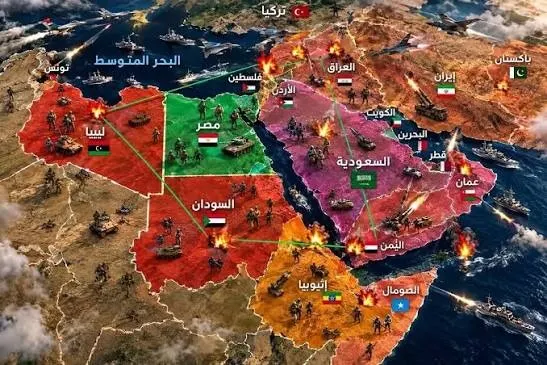
An analytical and forward-looking assessment of the balance of power, the prospects for war, and the potential outcomes of regional escalation.
First: When Containing a Conflict Becomes Harder Than Igniting It
The Middle East no longer faces isolated crises that can be contained independently; instead, it confronts a conflict where military calculations intertwine with economic interests. The standoff involving the United States, Iran, and Israel now intersects with the security of the Gulf, Yemen, Lebanon, and Iraq—not to mention its broader repercussions for international trade and energy markets. The danger of the current phase lies in the fact that an expansion of the confrontation does not necessarily require an explicit decision to launch an all-out war. A major military strike, an attack on a critical facility, or further disruption to maritime navigation could trigger a chain reaction of responses, causing events to spiral beyond the initial calculations of the parties involved. Recent developments reveal two simultaneous, parallel tracks: continued military escalation and pressure on maritime corridors, alongside political efforts to reopen channels for negotiation. On October 18, 2026, Tehran reaffirmed a proposal to reopen the Strait of Hormuz within seven days; however, significant disagreements with Washington persist regarding the terms and priorities for such negotiations. Meanwhile, risks to Saudi Arabia’s security and regional maritime navigation remain, even as Arab states take steps to contain the fallout of the crisis.
These circumstances raise a strategic question that transcends the daily news cycle: Are the parties using escalation to improve their leverage for a potential settlement, or has the convergence of various fronts pushed the region into a phase where containing the war has become more difficult than allowing it to continue? Answering this requires more than just predicting future events; it demands an understanding of the parties' interests, the limits of what they can afford to endure, and the indicators that might prompt them to recalibrate their calculations. First, consider the nature of the conflict: has force remained a means of exerting pressure, or has it become an end in itself? The current confrontation cannot be understood solely by comparing military capabilities; superiority in air power, missiles, or defense systems does not necessarily translate into the ability to impose a stable political outcome, nor does the capacity to absorb losses guarantee the achievement of stated objectives.
The United States and Israel seek to attain security and military goals concerning Iran’s capabilities and regional influence. Meanwhile, Tehran strives to safeguard what it deems its strategic interests, increase the cost of the military and economic pressure exerted upon it, and retain bargaining leverage to influence any future settlement. Yet, these objectives may conflict with the methods employed to pursue them: as the scope of strikes and counter-strikes expands, the confrontation risks shifting from targeting military assets to threatening economic infrastructure, maritime corridors, and vital national interests. This highlights the dilemma of deterrence: a party’s failure to respond may be perceived as a retreat, while an excessive response could provoke further escalation by the adversary. In either scenario, maintaining political and military credibility can become a burden that narrows the space for diplomatic maneuvering. Furthermore, weakening an adversary’s military capabilities does not necessarily eliminate their capacity to cause regional instability. Protracted conflicts can shift from direct confrontations into operations that—while relatively less costly—are far more disruptive to navigation, trade, and internal stability. Consequently, the benchmark for strategic success is not merely the number of strikes delivered or the scale of damage inflicted; rather, it is a party’s ability to translate military gains into a sustainable political arrangement—all while ensuring that the costs of the war do not outweigh its anticipated benefits.
The more critical question, then, is this: are the parties seeking a settlement that preserves their respective interests, or are they raising their demands to a level that makes political compromise more difficult than continuing the confrontation?
Second: Saudi Arabia, the Gulf, and Yemen—Expanding Risks and the Challenge of Protecting Sovereignty
Developments concerning the security of the Kingdom of Saudi Arabia hold particular significance—not only due to the Kingdom’s regional and economic standing, but also because its stability is intrinsically linked to the security of energy, trade, and investment, both within the region and beyond. On October 18, Reuters reported that Egypt had expressed its readiness to provide necessary support to Saudi Arabia, should the Kingdom request it, amid escalating Horthy attacks and a resurgence of fighting in Yemen following the collapse of a previous truce. These developments reveal that the Yemeni front is no longer a localized issue, separate from the broader regional confrontation; it has the potential to impact the security of Saudi territory, air traffic, energy infrastructure, and maritime navigation in the Red Sea and the Gulf of Aden—with further implications for the security of the Gulf region as a whole. In this context, it is essential to distinguish between three levels of analysis:
First: Saudi Arabia’s right to protect its territory, its citizens and residents, and its vital infrastructure, as well as its right to counter-aggression in accordance with international law.
Second: The necessity of assessing the potential consequences of any military response, ensuring that it achieves its defensive objectives while minimizing the risk of expanding the conflict or exposing civilians to further danger.
Third: The long-term political and security approach; it is insufficient to treat each attack as an isolated incident without addressing the underlying environment that enables these attacks to recur and expand in scope. Hence the importance of coordination—among Saudi Arabia, the Gulf States, and the broader Arab world—in sharing intelligence, strengthening air and naval defenses, and protecting vital infrastructure. This must be coupled with unified diplomatic efforts to minimize the risk of the conflict spreading to new arenas. Calling for the containment of escalation does not imply leniency toward acts of aggression; conversely, defending national sovereignty does not mean that all-out war is the only available option. Firmness in safeguarding national security and wisdom in managing responses are complementary elements, not mutually exclusive choices. Most importantly, the security of the Gulf is inextricably linked to the stability of Yemen, the safety of navigation in the Red Sea and the Strait of Hormuz, and the nature of relations among regional powers. Therefore, any successful approach must combine defensive deterrence with a political track—while carefully distinguishing between the responsibility for acts of aggression and the responsibility to protect civilians and prevent the expansion of the war.
Third: The Strait of Hormuz—a bargaining chip or a turning point in the conflict?
The Strait of Hormuz is one of the most critical maritime passages in the global energy system. Consequently, any disruption to navigation there affects not only the littoral states but also energy-importing economies, shipping and insurance firms, and industrial and commercial markets. Recent developments have taken on added significance, as Tehran has reaffirmed its readiness to open the Strait within seven days—provided its own conditions are met. Meanwhile, the dispute with Washington centers on the structure of potential negotiations, the issues of sanctions and blockades, and Iran’s nuclear program. Tehran seeks to prioritize the restoration of maritime security and the flow of oil, whereas Washington insists that the nuclear dossier be addressed as part of the negotiations. This divergence reveals that the issue is not merely a technical matter concerning the opening of a sea lane; rather, it is fundamentally about determining who holds the power to influence the terms of a settlement. Reaching an understanding regarding navigation could serve as a gateway to de-escalation and confidence-building. Conversely, if the parties involved condition freedom of passage on the fulfillment of all their political and security demands, the strait could become a tool for mutual leverage, thereby prolonging the crisis. The danger lies in the fact that persistent maritime threats impose additional costs on shipping and insurance, influence the decisions of transport and trade companies, and render markets increasingly sensitive to any new incident. These effects may persist even during periods when oil prices decline, as lower prices do not necessarily signify the disappearance of operational risks or the restoration of market confidence. For the Gulf States, the protection of maritime corridors is inseparable from the protection of oil facilities, ports, and infrastructure. Furthermore, relying solely on military solutions cannot guarantee sustainable navigation if the root causes of the confrontation remain. Therefore, the true test lies not merely in declaring the strait open, but in the ability to ensure safe and stable passage, prevent the use of commercial shipping as a means of political or military pressure, and establish clear arrangements that can be monitored and verified.
Fourth: Iraq and Lebanon—Countries Most Exposed to the Costs of Complex Conflict
In Iraq, the bill for war exposes the fragility of the economy. Iraq serves as a clear example of a state that can bear the costs of a regional war, even when it is not the party that initiated it. Its economy is heavily dependent on oil exports, with its capacity to fund the national budget, public spending, and imports tied directly to the continuous flow of oil revenues. On October 16, press reports cited the Iraqi Foreign Minister, who estimated war-related losses at approximately $60 billion—a figure reflecting disruptions to oil exports, declining revenues, and mounting economic pressures. This figure should be viewed as a government estimate attributed to an official; its timeframe and methodology require verification before it can be treated as a definitive economic outcome. The strategic significance, however, extends beyond the number itself: the crisis reveals that a heavy reliance on a single resource—compounded by a lack of export and financial alternatives—leaves the Iraqi economy highly vulnerable to external shocks. Consequently, any prolonged disruption to maritime navigation transforms into a crisis affecting the national budget, exchange rates, commodity prices, public services, and employment opportunities. On the political and security fronts, Iraq faces the challenge of safeguarding its sovereignty, preventing its territory from being used as a staging ground for settling regional scores, and maintaining relations with Arab, regional, and international states in a manner that aligns with its national interests. Achieving this requires more than a mere declaration of neutrality; it demands institutions capable of implementing such a policy, a balanced foreign policy, a unified security decision-making process, and economic management that reduces reliance solely on oil revenues. Iraq does not need to involve itself in the conflicts of others to establish its regional presence; rather, it must strengthen the state, protect its citizens, expand economic cooperation, develop alternative transport and export routes, and foster an investment environment that mitigates the impact of external crises.
As for Lebanon, can diplomacy transform a cessation of hostilities into a lasting settlement? Lebanon faces a distinct dilemma: the persistent confrontation with Israel, the entanglement of internal security issues with regional conflicts, and ongoing disputes regarding arms, sovereignty, and the Israeli withdrawal. According to a Reuters report published on October 17, a Lebanese military delegation is set to participate in a US-mediated trilateral meeting on October 20, with the aim of calling for an end to Israeli attacks. However, the convening of this meeting does not imply that an agreement has been reached; rather, it serves as a test of the parties' willingness to move beyond merely managing the confrontation toward addressing its root causes. The challenge lies in the fact that any sustainable settlement requires a simultaneous approach to several issues: the cessation of military operations, border protection, and the sovereignty of the Lebanese state, security arrangements, and the future of arms held outside state institutions. If these matters are addressed only partially or in a contradictory manner, a ceasefire could end up being nothing more than a temporary truce—a pause that allows for the regrouping of capabilities before hostilities resume. This highlights the significance of both Lebanon and Iraq within the regional security equation; both nations must prevent their territories and institutions from becoming arenas for rivalry between external powers, even though the nature of the internal challenges they face may differ.
Fifth: The Global Economy—From Energy Shock to the Cost of Attrition
The economic burdens of war are not distributed equally. While some energy-producing nations may benefit from rising prices under certain conditions, such gains do not mean the global economy is insulated from the losses caused by disruptions to supply chains and maritime navigation. Higher energy prices drive up the costs of transport and production, potentially inflating the prices of goods and services, while disruptions to shipping and insurance place strain on businesses and importers. Economies with limited financial resources are hit hardest—especially when an energy shock coincides with currency weakness, rising debt, or increased import costs. Meanwhile, countries reliant on oil exports may face a more complex paradox: high prices on one hand, and difficulties in exporting the required volumes on the other. Consequently, the actual level of revenue depends not merely on global prices, but also on a nation’s capacity for production, transport, and marketing. Furthermore, persistent maritime risks may compel companies to alter their routes, delay shipments, or increase reserve inventories—all of which drive up final costs, even if supplies are not completely halted. From a strategic perspective, energy—during such crises—transforms from a mere economic commodity into a tool for political leverage. However, the excessive use of this tool can backfire on the nations employing it, leading to a decline in demand, greater economic isolation, and the incentivization of importers to seek alternative sources and supply routes. Moreover, preventing the disruption of maritime navigation and ensuring the stability of energy flows is not solely in the interest of the Gulf states; it is a shared international interest. This necessitates cooperation to protect vessels and vital infrastructure, maintain open channels of communication, and avoid targeting the civilian and economic infrastructure upon which the lives of the population depend.
Sixth: Where is the region heading? Three scenarios based on available indicators.
A responsible strategic assessment cannot be built upon a single, definitive prediction—especially in a conflict where positions shift rapidly. A more accurate approach is to identify potential trajectories and link each one to the indicators that might drive it.
The first scenario: Assumes that the parties involved come to realize that continued confrontation only increases costs without guaranteeing the achievement of their full objectives. De-escalation could begin with a limited understanding regarding navigation in the Strait of Hormuz, a cessation of certain attacks, or security arrangements that allow for the resumption of negotiations. The significance of this scenario lies in the fact that it does not require the resolution of all disputes at once; rather, an agreement on verifiable measures could serve as a gateway to addressing more complex issues later. However, its success remains contingent upon the parties' willingness to make mutual concessions, the establishment of clear monitoring mechanisms, and the inclusion of safeguards to prevent the de-escalation period from being exploited to reignite the conflict. Indicators supporting this scenario include a decline in maritime attacks, clearly defined terms for negotiation, the implementation of verifiable reciprocal steps, and progress in regional and international mediation efforts.
The second scenario: The confrontation continues along its current trajectory—falling short of both a comprehensive settlement and an all-out war across all fronts. The parties engage in an exchange of military and economic pressure, punctuated by brief periods of limited de-escalation that are, in turn, interrupted by new incidents. This scenario is significant for analysis because it neither requires a decisive victory for any side nor assumes the total collapse of negotiation channels. Instead, it leaves the region prone to persistent tension, raises the costs of security, investment, and trade, and places mounting security and financial pressures on governments. Perhaps most dangerously, the normalization of escalation can cause recurring incidents to appear less significant, even as their cumulative effects build toward a confrontation that exceeds the parties' capacity to contain it. Indicators supporting this scenario include the persistence of maritime threats, the stagnation of negotiations, and the fact that military operations remain confined to limited, sporadic engagements—with no clear willingness to pursue a broader settlement.
Third scenario: This possibility gains traction if the targeting of a strategic facility, a high number of casualties, or widespread disruption to navigation triggers a series of escalatory responses involving additional parties. The risks could further intensify if communication channels break down, the list of targets expands, or the fronts in Yemen, Lebanon, and Iraq become more directly integrated into the confrontation. This does not imply that an all-out war has become inevitable; rather, the risk increases when political options narrow, domestic costs of de-escalation rise, and each side becomes convinced that its adversary will only respond to greater force. Indicators supporting this scenario include the broadening scope of targets, repeated attacks on vital infrastructure, the decline of mediation efforts, military preparations that go beyond limited retaliation, and the persistent breakdown of negotiation channels. It is important not to interpret these scenarios as equally probable outcomes or predetermined conclusions; assessing the likelihood of any one of them requires continuous monitoring of developments on the ground, official statements, and diplomatic shifts.
Seventh: What can Arab states do to prevent the conflict from widening?
While individual Arab states cannot resolve every dispute between major global and regional powers, they can influence the environment in which these conflicts unfold. They can reduce the likelihood of such conflicts spilling over into their own territories, institutions, and economic interests. This begins with strengthening political and security coordination among the states involved, sharing intelligence, and protecting critical infrastructure and maritime corridors—all while maintaining open channels of communication with influential parties. It also requires taking a clear stance against violations of state sovereignty, without allowing disagreements to escalate into open-ended conflicts with unpredictable outcomes. Here, the importance of collective Arab diplomacy becomes clear—not as a substitute for national defense, but as a means to mitigate the risks of miscalculation and create pathways for negotiation. This role requires specific objectives: protecting civilians, ensuring the security of navigation, preventing Arab territories from being used as launch pads for attacks, and supporting settlements that respect state sovereignty and adhere to international law.
Furthermore, strategic thinking should not be limited to managing the current crisis. Recent events have underscored the necessity of diversifying revenue sources, bolstering reserves and logistical capabilities, developing alternative energy export routes, and—wherever feasible and economically viable—reducing reliance on transit corridors most vulnerable to disruption. Ultimately, the state's best equipped to absorb shocks are those that combine defense readiness, economic resilience, institutional cohesion, and a balanced foreign policy.
Eighth: The true strength lies in preventing a war with uncontrollable outcomes.
The Middle East faces a test that transcends mere military balance; it hinges on the ability of leaders to assess consequences, recognize the limits of exerting pressure, and transform temporary gains into sustainable political and security arrangements. Current developments demonstrate that the conflict is no longer confined to the relationship between Washington and Tehran, or the confrontation between Iran and Israel. Its repercussions now affect the security of Saudi Arabia and the Gulf, the future of Yemen and Lebanon, the stability of Iraq, and the global flow of energy and trade. In such an environment, it is not enough for any party to simply declare its capacity to continue fighting. The more critical question is whether a party can achieve its objectives without plunging the region into a prolonged state of exhaustion—or creating conditions that would render any future settlement far more difficult and costly to reach. Protecting sovereignty and rejecting aggression is both a right and a responsibility. However, effective defense cannot be separated from an assessment of the consequences and efforts to prevent the conflict from expanding. Diplomacy, meanwhile, does not constitute a surrender of rights; rather, it is a means to explore the possibility of reaching arrangements that preserve security and reduce the likelihood of war reigniting. For Arab states, the challenge extends beyond merely avoiding entanglement in the conflicts of others; it encompasses building an independent capacity to safeguard national interests, strengthening regional cooperation, and fortifying economies and societies against the repercussions of protracted crises. While it is impossible to predict the path the region will take, its future will undoubtedly be shaped by the ability of the various parties to contain escalation, as well as by the decisions made in the coming days and weeks—particularly regarding the Strait of Hormuz, the front in Yemen, and the avenues for negotiation. The strategic question that should occupy both policymakers and the public remains:
Will the existing balance of power serve as a gateway to a settlement that preserves the sovereignty of states and the security of their peoples, or will the escalation continue until the cost of war exceeds the parties' ability to control its outcomes?
The future of the Middle East must not be left to miscalculations or a cycle of reciprocal retaliation. Instead, it requires responsible leadership, serious diplomacy, and regional cooperation—an approach that protects sovereignty, safeguards human life, and prevents political disputes from spiraling into open-ended wars.
Sources:
Reuters, October 18, 2026: Iran urges the United States to accept proposal to reopen the Strait of Hormuz; https://www.reuters.com/world/middle-east/iran-urges-us-accept-proposal-reopen-strait-hormuz-2026-10-18/;
Reuters, October 18, 2026: Egypt announces its readiness to provide necessary support to Saudi Arabia amid the escalating conflict with the Houthis; https://www.reuters.com/world/middle-east/egypt-says-ready-give-saudi-arabia-necessary-support-amid-houthi-conflict-2026-10-18/;
Reuters, October 17, 2026: Lebanon seeks to halt Israeli attacks during upcoming US-mediated talks; https://www.reuters.com/world/middle-east/lebanon-says-military-delegation-will-press-halt-israeli-attacks-us-talks-2026-10-17/;
Arab News, citing Agency France-Presse (AFP), October 16, 2026: Iraq reports losses estimated at $60 billion due to the impact of the war on oil exports; https://www.arabnews.com/middle-east/iraq-says-lost-60bn-as-mideast-war-hits-oil-exports-3006727;
Reuters, October 16, 2026: Rates for supertankers (VLCCs) retreat from record highs amid shipping disruptions; https://www.reuters.com/business/energy/supertanker-rates-fall-record-highs-2026-10-16/