
Is the existing international order in decline? And who is shaping the rules of the new world?
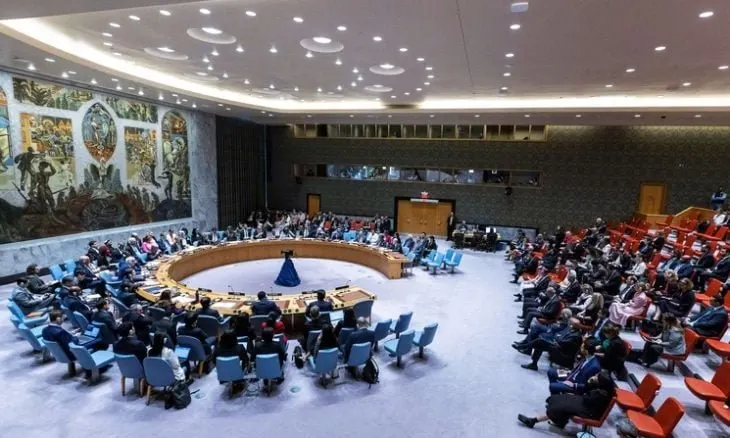
An Analytical Reading of the Balance of Power, the Future of International Law, and the Fate of the Global Order.
The question currently posed within international political and intellectual circles is no longer limited to identifying the most influential state or the power capable of imposing its will; rather, it has evolved into a deeper inquiry: Is the existing international order still capable of regulating relations between states, or is the world witnessing a gradual shift in the rules of power and decision-making?
Since the end of World War II, the modern international order has been founded on principles of national sovereignty, the prohibition of the use of force in violation of the UN Charter, and the peaceful settlement of disputes. However, the gap between these principles and their practical application has remained a point of contention—a gap that has become increasingly apparent amidst escalating great-power rivalry, proliferating conflicts, and waning confidence in the ability of international institutions to address crises with the requisite effectiveness.
These developments indicate that the world is undergoing a restructuring of the balance of power. Yet, this does not necessarily imply the collapse of the international order or the disappearance of existing institutions; instead, it raises serious questions regarding their capacity to adapt to a changing international reality.
First: From a system led by a hegemonic power to a world of multiple centers of influence
International power is no longer measured solely by military superiority; it now encompasses economic capacity, scientific and technological advancement, data control, market influence, and the ability to forge alliances and partnerships. The World Economic Forum’s *Global Risks Report 2026* indicates that 68% of survey respondents anticipate a multipolar or fragmented international order over the next decade, characterized by competition among major and middle powers to define regional rules and standards. In contrast, only 6% foresee a return to the previous unipolar system. While these figures reflect the perceptions of participants and experts—rather than definitive predictions of the future—they highlight the widening debate regarding the shape of the emerging international order.
A multiplicity of power centers may create opportunities for new nations to strengthen their presence; however, it could also intensify competition over spheres of influence, markets, and strategic resources. The impact of this shift depends on the ability of states to manage their differences and on the existence of rules that govern competition and prevent it from escalating into open confrontation.
Second: The United Nations—Between the Legitimacy of Principles and the Limits of Implementation
The United Nations remains the broadest international framework bringing nations together to address issues of peace, security, human rights, and development. Yet, the fundamental challenge lies not so much in a lack of legal principles as in the difficulty of implementing them consistently when the political interests of influential powers clash.
The Security Council stands at the heart of this dilemma, primarily due to the veto power held by its permanent members, which can block resolutions on issues where the interests of major powers diverge. In February 2025, the United Nations witnessed extensive discussions regarding the reform of global governance and the modernization of the Security Council, reflecting ongoing debate over the extent to which international institutions represent the global balance of power and the needs of the contemporary world.
Consequently, UN reform should not be reduced to merely increasing membership or altering procedural details; rather, it requires a broader discussion concerning equitable representation, decision-making effectiveness, and the international system's capacity to protect civilians and resolve conflicts.
An international institution does not lose its significance simply because it falters during certain crises, nor does its mere survival guarantee justice; the true benchmark is its ability to uphold its founding principles more effectively and consistently.
Third: International Law Faces a Credibility Test
One of the most critical challenges facing the international system is the widening gap between established legal norms and their actual application in specific conflicts.
International law was designed to limit the use of force, safeguard state sovereignty, regulate inter-state relations, and reinforce obligations regarding civilian protection and human rights. However, the credibility of these rules is undermined when the international community observes inconsistent responses to violations or difficulties in holding perpetrators accountable. Yet, instances of selectivity or implementation failures do not mean international law has lost its legitimacy, nor do they justify abandoning it; instead, they render the need for its consistent application all the more urgent. The stability of international relations cannot rest on the principle that the powerful dictate what is permissible and what is not, while weaker states are expected to adhere to rules that lack guaranteed enforcement. Furthermore, upholding international law must not be selective or contingent upon the identity of the parties involved; legal standards must be applied based on the relevant facts and obligations, irrespective of a state’s identity or political standing.
Should international rules lose the confidence of peoples and nations, the consequences would extend far beyond diplomatic institutions, potentially diminishing prospects for peaceful settlement, fostering a reliance on deterrence and confrontation, and undermining trust in international agreements.
Fourth: Technological Competition Redefines Power
Advanced technology has become a cornerstone of international influence, particularly in fields such as artificial intelligence, semiconductors, cyber security, telecommunications, and space.
Competition in these areas extends beyond mere economic gain; it encompasses national security, the ability to protect infrastructure, influence over information flows, and the determination of future standards adopted by nations and corporations. This issue is of growing importance to developing nations, which risk becoming mere consumers of technology and its established rules rather than participants in its production and the shaping of its standards.
The Global Digital Compact—adopted by UN member states in 2024 as part of the Pact for the Future—addressed the importance of international cooperation in the governance of technology and artificial intelligence, the narrowing of digital divides, and the expansion of opportunities to benefit from innovation.
However, translating these commitments into tangible results requires funding, capacity building, and the advancement of education and scientific research. It also necessitates ensuring that the technological divide does not evolve into a new form of disparity regarding influence and opportunity.
Those who possess the knowledge and capability to develop technology gain additional tools to influence the global economy; yet, stability in this sector also requires shared rules that mitigate risks and promote the responsible use of new technologies.
Fifth: Is the World Heading Toward Competing Blocs?
Nations face mounting pressure to re-evaluate their economic and security ties, diversify partnerships, and reduce reliance on limited sources within vital sectors. While this could foster regional cooperation and drive the development of alternatives for supplies, technology, and finance, it could also lead to deeper fragmentation if partnerships morph into closed blocs or if trade and investment increasingly become tools of political leverage.
A multipolar distribution of power does not inevitably lead to all-out conflict; it can offer nations broader opportunities for cooperation and for balancing competing interests. However, these opportunities do not materialize automatically; they require active diplomacy, clear agreements, and institutions capable of resolving disputes.
In this context, the responsibility of major powers is heightened, as their decisions affect not only their own national interests but also impact other nations—particularly those with limited capacity to withstand political and economic shocks.
The question is not whether competition will persist, but whether nations can manage it through shared rules or allow it to devolve into an unbridled race for influence.
Sixth: Where do the Arab world and Iraq stand amidst these transformations?
International shifts do not compel Arab nations to automatically choose sides among competing powers; rather, they necessitate a review of foreign policy tools and economic and security priorities. Nations possessing diversified economies, effective institutions, advanced education systems, and knowledge-production capabilities are better positioned to safeguard their interests and negotiate from a more balanced standpoint. As for Iraq, its geographical location, natural resources, and regional and international relations afford it significant potential. However, capitalizing on this potential requires a balanced foreign policy, strong national institutions, an economy less dependent on a single resource, the rule of law, and the capacity to make decisions based on the national interest.
It is not enough for Iraq merely to be present in its dealings with major powers; it must be capable of clearly defining its priorities, diversifying its partnerships, and avoiding the transformation of its territory or resources into an arena for others to settle scores.
Furthermore, strengthening national independence is not achieved through slogans alone, but by building a state that commands the confidence of its citizens protects their rights, manages its resources transparently, and grounds its foreign relations in its institutions and constitutional interests.
The more cohesive the state is internally, the greater its ability to navigate international shifts as a partner rather than as a party to whom choices are dictated.
Seventh: Who writes the rules of the new world?
The world is undergoing profound shifts in the distribution of influence and the instruments of power, yet the shape of the future international order remains undecided. A multipolar distribution of power could pave the way for new balances, or it could exacerbate competition and division; the outcome depends on the decisions of states, the capacity of international institutions to reform, and the extent to which shared legal norms are respected.
A fundamental task remains for the international community: modernizing institutions to broaden representation and enhance effectiveness, strengthening dispute-resolution mechanisms, shielding international law from selective application, and ensuring that technology and economic power do not become tools for imposing one's will upon weaker nations and peoples. The international order is measured not merely by the capacity of major powers to impose their interests, but also by its ability to provide fair and stable rules that protect nations from aggression, afford peoples the opportunity to live in security and dignity, and enable developing nations to participate in shaping their own futures.
The question the world must ask itself remains: Will the rules of the emerging international order be the product of consensus among nations—grounded in law and mutual interests—or will they be determined solely by the balance of power?
The answer will not be forged by a single state; rather, it will depend on the international community’s will to transform competition into cooperation, influence into responsibility, and power into a means of safeguarding peace rather than undermining it.
Sources:
World Economic Forum – Global Risks Report 2026.
Source regarding expert perceptions on multipolarity and the fragmentation of the international order.
United Nations – Pact for the Future.
Official reference on global governance reform, international cooperation, and the Global Digital Compact (2024).
United Nations – Discussion on global governance reform, February 18, 2025.
Reference for international discussions on modernizing the UN and the Security Council; official coverage.
Human Rights Council – Report on geopolitical trends and drivers of the North-South divide, 2025.