
The Region Between Settlement and Confrontation: Will Elections Determine the Course of the Conflict?
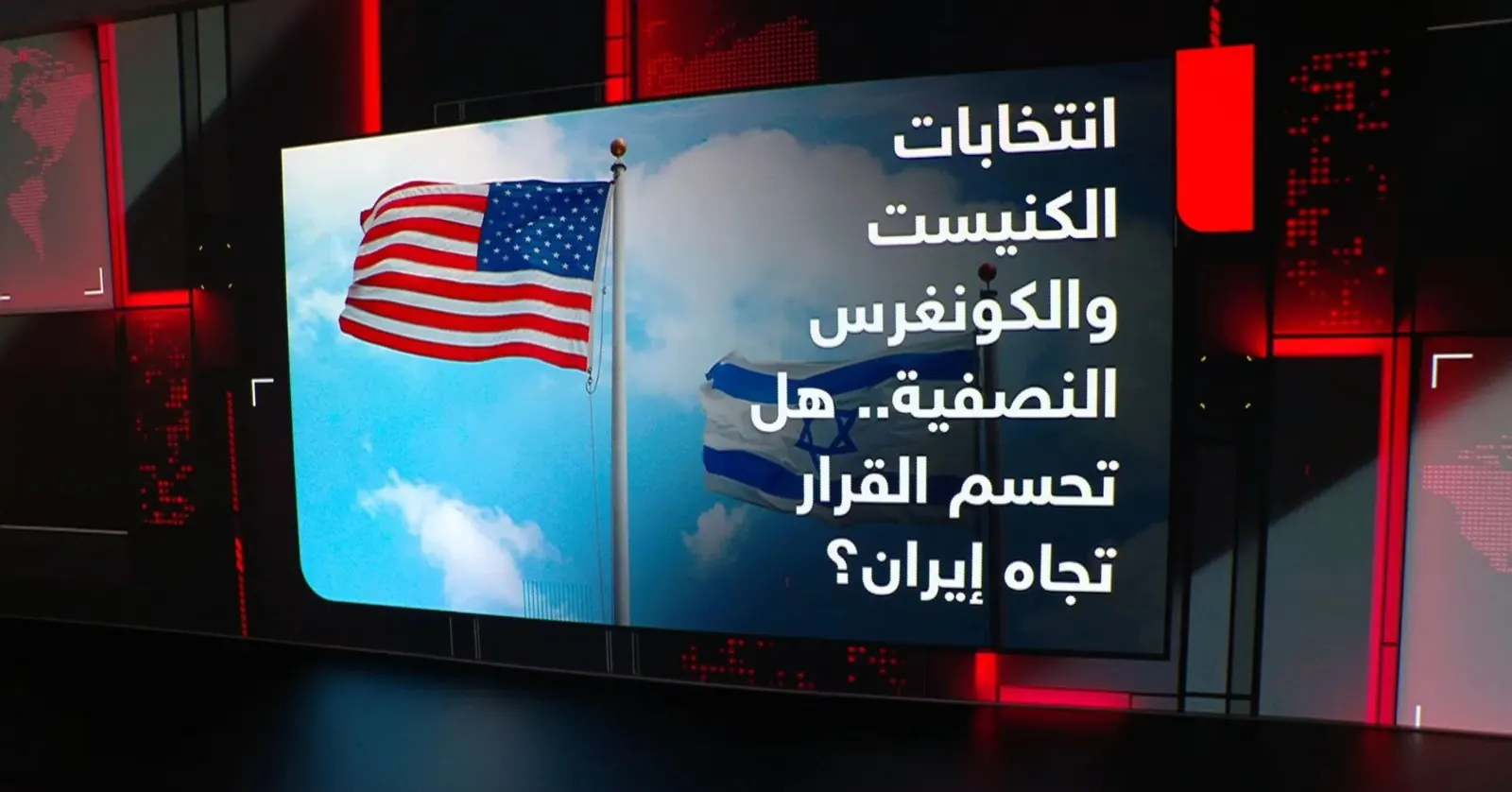
An analytical look at the intersecting calculations of the U.S., Israel, and Iran, the future of international decision-making, and the implications for Arab security.
When Diplomacy Intersects with Military Preparations
The region is currently navigating a delicate phase in which military maneuvers and diplomatic efforts intertwine, and where political and electoral calculations intersect with the interests of international and regional powers. Amidst statements that leave the door open for negotiation and reports suggesting the potential for renewed military strikes, a fundamental question arises: are the parties involved seeking to improve the terms of a settlement through pressure, or could the accumulation of tensions push the region toward a new confrontation—one whose repercussions would be difficult to contain?
Understanding this landscape requires looking beyond individual events as isolated developments. Instead, one must examine the interplay between military mobilization, the trajectory of negotiations, the electoral processes in the United States and Israel, the future of U.S. policy toward Iran, and the concerns of Arab and Gulf states regarding the potential expansion of the conflict.
However, the coincidence of these developments does not confirm the existence of a secret deal among the parties, nor does it imply that a decision for war has been made. Rather, it necessitates a strategic analysis that distinguishes between public facts, underlying calculations, and outcomes that remain yet to be seen.
First: Washington and Tehran—Is Military Pressure Being Used to Impose Settlement Terms?
The relationship between the United States and Iran remains the most influential factor in the future of regional escalation. Washington seeks to protect its interests and achieve its security objectives—foremost among them preventing Iran from acquiring nuclear weapons—while Tehran strives to preserve its leverage and avoid any settlement that does not align with its strategic calculations.
In this context, reports published on October 28, 2026, gained particular significance. The Associated Press reported that U.S. officials had warned regional parties of the possibility of renewed military strikes against Iran following the U.S. midterm elections scheduled for November 3, while also preparing for a potential Iranian response. At the same time, the reports indicated that U.S. President Donald Trump had not yet made a final decision regarding the execution of new strikes.
This development underscores the seriousness of the preparations and concerns involved; however, it is not sufficient on its own to conclude that war has become inevitable. Military maneuvers may be intended for deterrence and pressure, or to ensure that options are readily available should negotiations fail—though they could also serve as a prelude to an actual operation, should the political decision to proceed be made.
In a significant diplomatic development on October 30, Qatari mediation efforts returned to the forefront. According to a source familiar with the negotiations who spoke to Reuters, Qatari mediators returned to Tehran to continue efforts aimed at reaching an understanding between Washington and Tehran, in coordination with the American side. However, these efforts have run up against a fundamental disagreement regarding the sequencing of negotiation terms. Washington seeks to include the nuclear dossier from the very start of the talks, while Tehran demands that the U.S. blockade of its ports be lifted and sanctions on its oil exports be removed first. Indeed, an Iranian official has previously described the proposals put forward by Qatar as unacceptable.
This development carries two key implications: first, that diplomatic channels remain open and genuine attempts are being made to bridge the gap between the two sides; and second, that core disagreements remain unresolved, with each party attempting to lock in its own terms before entering into a broader settlement.
Second: US and Israeli Elections—Factors in Decision-Making
The timing of a potential escalation cannot be viewed in isolation from ongoing political developments. Elections do not merely shape the future of political parties and their leaders; they can also influence decisions regarding foreign policy and national security.
The US midterm elections, scheduled for November 3, arrive at a time of growing concern over how a confrontation with Iran might affect energy prices, markets, and the US economy—not to mention its impact on domestic political calculations.
Press reports have linked the possibility of renewed strikes to the conclusion of the elections, noting that military plans are under consideration—though this does not mean their execution is a foregone conclusion.
Naturally, the US administration must weigh the costs and timing of any major military operation. However, the decision does not hinge on elections alone; it is also shaped by national security assessments, military readiness, the potential for retaliation, the positions of allies, and the prospects for diplomatic solutions.
As for Israel, the results of the elections held on October 27—with the final seat distribution released by the Central Elections Committee on October 30—show that neither of the two main political blocs secured the parliamentary majority required to form a government on its own. According to the published results, Benjamin Netanyahu’s camp secured 53 seats, compared to 48 for the opposition, while Arab lists won 19 of the 120 seats in the Knesset. Consequently, the formation of the next government remains contingent upon political negotiations and coalition-building, rather than an outcome that grants either camp an independent majority.
While this uncertainty may influence the calculations of the Israeli leadership and the level of coordination with Washington, it does not prove that the timing of a potential war is exclusively linked to Benjamin Netanyahu remaining in power, nor does it imply that the United States would refrain from taking military action without guarantees for the survival of his government.
More accurately, the American and Israeli elections—alongside military and strategic considerations—represent intertwined factors in the calculations of the various parties. While some leaders might seek to exploit tensions to bolster their own political standing, attributing such intentions to them definitively would require direct evidence.
Thus, the period following the U.S. elections may serve as a significant juncture during which the direction of future decisions becomes clearer; it does not, however, constitute a definitive timeline for the outbreak of war.
Consequently, the resumption of mediation cannot be taken as a sign that an agreement is imminent, just as the military buildup cannot be viewed as definitive proof that war is inevitable.
Herein lies the paradox: while increased military pressure may push the other side toward negotiations, it simultaneously raises the risk of miscalculation—potentially sliding the parties into a confrontation that neither side wishes to see escalate.
Third: The Post-US Election Landscape—Will the Iran File Enter a New Political Phase?
This issue is among the most significant questions worth examining, as the results of the midterm elections concern not only the balance of power within Congress but may also affect the US administration’s capacity to manage foreign policy matters—foremost among them, the Iran file.
Should the Republicans lose their majority in the House of Representatives, the Senate, or both, the Trump administration could face heightened congressional oversight and mounting political pressure regarding the continued confrontation with Iran, its associated economic and military costs, and the limits of the authorization to use military force.
In a report dated October 25, Reuters addressed this possibility, noting that if control of one or both chambers of Congress were to shift to the Democrats, it could pave the way for demands—such as requiring authorization for military operations, reviewing defense spending, and summoning officials to provide explanations regarding the conduct of conflict.
However, it is crucial to distinguish between losing a parliamentary majority and losing the presidency. Midterm elections do not end a president’s term, nor do they signify a transfer of executive power to the opposing party; regardless of the congressional election results, Trump will remain in the White House until his term concludes in January 2029.
Furthermore, a US president’s authority over foreign policy and military command does not vanish simply because the parliamentary majority changes—though Congress does possess influential constitutional and legislative tools, including oversight, control over funding, the power to legislate, and the authority to grant or withhold authorization for the use of military force. War powers resolutions govern the relationship between the executive and legislative branches—including requirements for notifying and consulting with Congress, as well as procedures regarding the continued involvement of U.S. forces in hostilities absent legislative authorization. However, the interpretation of the limits of presidential and congressional authority remains a subject of legal and political dispute in certain instances. In this context, three possibilities emerge:
First Scenario: Resolving the Issue During the Trump Administration
The U.S. administration may seek to reach an agreement with Iran before the end of its term—whether through mediation or by combining military and economic pressure with negotiation—thereby allowing Washington to present tangible results regarding the nuclear and security dossier.
Second Scenario: Managing the Crisis Without a Final Resolution
Washington might choose to continue a policy of pressure and deterrence while keeping channels for negotiation open, effectively deferring a comprehensive settlement. This could lead to persistent uncertainty, ensuring that the Iran file remains a fixture in U.S. policy without ever reaching a definitive conclusion.
Third Scenario: Passing the Issue to the Next U.S. Administration
If disagreements persist and the Trump administration fails to reach an understanding, the Iran file could be handed off to the administration that takes office in January 2029. That administration would then find itself confronting a backlog of issues concerning the nuclear program, sanctions, Gulf security, regional influence, and relations with Tehran.
This does not necessarily mean the incoming administration will lean toward negotiation or escalation; that will depend on the identity of the next president, their political agenda, and the security and economic conditions they inherit.
It is important here not to conflate the shift in control of Congress in January 2027 with the presidential transition in January 2029; these are entirely distinct events in terms of both timing and authority.
Ultimately, the core of the matter is that the Iran file could evolve from a crisis tied to the calculations of a single political administration into a long-term strategic issue managed by successive U.S. administrations—all while the countries of the region continue to face ongoing challenges regarding security, stability, and their economies. This raises an important question: Is Washington seeking to resolve the crisis during the remainder of Trump’s term, or might the combination of continued pressure and negotiation turn the Iran dossier into a protracted crisis—one passed down from one U.S. administration to the next—while the countries of the region bear a significant portion of the cost of this instability?
Fourth: Arab and Gulf Security—Repercussions Beyond the Immediate Parties to the Conflict
Should the confrontation reignite, its impact would not necessarily be confined to the direct participants. Escalation could affect maritime security, energy supplies, trade, markets, and critical infrastructure, confronting Arab and Gulf states with simultaneous security and economic challenges.
These concerns are amplified by the widening scope of the ongoing confrontation, as well as reports of U.S. warnings to regional states regarding the potential for Iranian retaliation—targeting energy facilities and infrastructure—should military operations resume.
This underscores the importance of diplomatic engagement and regional coordination to prevent the conflict from expanding, to safeguard national interests, and to minimize the risk that regional territories or vital corridors might be exploited in a confrontation whose trajectory is not solely controlled by the states in the region.
Advocating for de-escalation does not imply ignoring security risks, nor does strengthening defensive capabilities equate to choosing war. A more balanced approach combines deterrence and dialogue with the protection of critical infrastructure and the maintenance of open channels of communication.
While the interests of Arab and Gulf states may not align in every detail, the avoidance of a large-scale war and the preservation of economic and security stability constitute a broad, shared interest.
Therefore, the question is not merely whether Washington and Tehran will reach an understanding; it also concerns the extent to which regional actors can mitigate the repercussions of any escalation and prevent it from spiraling into a broader crisis that would be difficult to contain.
Fifth: Iraq—Can a National Decision-Making Process Protect the Country from the Repercussions of Conflict?
In this landscape, Iraq serves as a crucial factor for regional stability, given its geographical location and its complex web of political, security, and economic relations.
The Iraqi arena has witnessed diplomatic outreach toward neighboring countries, aimed at strengthening cooperation and discussing regional developments. However, the true value of these efforts is not measured solely by visits or official statements, but rather by their capacity to yield practical results that safeguard national interests and shield the country from the fallout of surrounding confrontations.
A fundamental issue arises here regarding the ability of state institutions to make independent security and political decisions, particularly given the existence of multiple centers of influence and various armed factions—some of which maintain ties to Iran.
A study published by Chatham House on June 9, 2026, addresses this challenge, noting the difficulty of bringing all armed groups under effective government command. It further highlights the risks that emerge when the actions of certain groups run counter to the government’s policy of keeping the country out of conflict.
This does not imply that every Iraqi action is directed from abroad, or that the state lacks any autonomy in its decision-making. Rather, the core issue concerns the extent to which official institutions can implement a coherent national policy and ensure that security and military decisions remain exclusively in the hands of the state.
Consequently, the success of any Iraqi diplomatic initiative hinges on its ability to bolster the sovereignty of official institutions, prevent Iraqi territory from becoming a theater for settling regional scores, and prioritize the interests of the citizenry and national stability above all other considerations. Diplomacy is important, but it becomes more effective when it is backed by a state capable of enforcing its decisions and protecting its borders and interests.
Sixth: The Missing Link—Are the parties heading toward a settlement or a calculated escalation?
When these various threads are brought together, a more coherent picture emerges: negotiations with as-yet-undetermined outcomes; military preparations that heighten risks; elections that influence the calculations of leaderships; the potential for shifting balances within American institutions; Arab and Gulf concerns regarding an expansion of the confrontation; and internal challenges that affect the ability of certain regional states to safeguard their own national decision-making.
However, these factors do not imply that all parties are acting according to a single, unified plan. Interests may converge on one issue while clashing on another; the trajectory of the crisis could shift due to a political decision, a security incident, or a miscalculation regarding the intentions of an opposing party.
Against this backdrop, three main scenarios can be envisioned for the coming phase:
First Scenario: Gradual Settlement and Containment of Escalation
Mediation efforts may succeed in bringing the parties back to the negotiating table or in reaching an interim understanding that limits the likelihood of confrontation—even if core disputes remain unresolved. This depends on a genuine willingness to make mutual concessions and the establishment of safeguards to prevent such understandings from collapsing.
Second Scenario: Sustained Pressure Short of All-Out War
Threats and military maneuvers may continue alongside diplomatic channels, keeping the region in a state of high tension. In this scenario, military and economic pressures could persist for an extended period without leading to a final settlement or a full-scale confrontation.
This trajectory may also intersect with political shifts in the United States—for instance, if election outcomes result in greater congressional constraints on the administration, even without a radical change in executive policy.
However, the persistence of this situation does not necessarily signify the success of a deterrence strategy; it could instead lead to economic and security exhaustion, while increasing the risk of miscalculation or unintended incidents—particularly if one side assumes that the other will eventually back down under pressure.
Third Scenario: Renewed Strikes and Widening Confrontation
Should diplomatic efforts falter and the parties opt to use force, strikes could resume, followed by reciprocal responses. This would heighten the risk of the conflict expanding, with significant repercussions for regional security and the global economy.
It is impossible to determine in advance which of these paths will ultimately unfold. The most significant indicators are not merely statements, but rather official decisions, confirmed military movements, the nature of diplomatic communications, the stances of American institutions, and the extent to which the parties are prepared to avoid a confrontation whose costs would outweigh any expected gains.
Seventh: Political Calculations and the Future of the Region
The region stands at a sensitive juncture where military calculations intersect with elections and negotiations, and where international and regional interests exert influence—pushing either toward escalation or de-escalation.
The period following the U.S. elections may serve as a critical milestone in clarifying the nature of the path ahead; however, it guarantees neither war nor a settlement. Similarly, while the future of the Israeli government may influence political and military coordination, it does not reduce U.S. decision-making to a single factor.
Furthermore, the results of the U.S. midterm elections could usher in a new phase of power dynamics within Congress, affecting the administration’s ability to manage the "Iran file"—though this does not imply a transfer of executive power or the end of the president’s term.
Should core issues remain unresolved by the end of the Trump administration, the incoming U.S. administration may find itself facing a compounding regional crisis—one that would necessitate a reassessment of how to engage with Iran, whether through negotiation, pressure, or a combination of both.
In this context, Arab and Gulf states bear a responsibility to strengthen coordination and safeguard their own interests. Meanwhile, the stability of Iraq remains contingent upon the ability of its state institutions to consolidate national decision-making and prevent competing centers of influence from undermining their authority.
The true challenge lies not in predicting the timing of a potential war, but in understanding the conditions that might either avert it or make it more likely.
Military mobilization can sometimes lead to negotiations, just as ongoing communication cannot preclude escalation if narrow-minded calculations and misjudgments prevail over the prospects for a settlement.
Will the powers involved use military pressure to reshape the terms of negotiation, or might a complex interplay of political and electoral calculations push the region toward a broader confrontation—one for which everyone will pay a price?
Can diplomacy succeed in resolving the Iranian dossier before responsibility shifts to a new U.S. administration, or will this issue remain open, subject to political and strategic considerations that transcend the limits of a single presidential term?
The answer will emerge from actual decisions and actions, not merely from speculation. Amidst the possibilities for a settlement and the risks of escalation, diplomacy, restraint, and respect for the sovereignty of states remain the path that entails the lowest cost for the peoples of the region and their future.
"The next confrontation with Iran might not be merely a battle of missiles; it could also involve political decisions, electoral calculations, and international interests. Perhaps the most dangerous aspect of the crisis is not just the outbreak of a confrontation, but its potential continuation with no clear prospect for a resolution."
Sources
Reuters – October 30, 2026: Qatari mediators return to Tehran to push for a U.S.-Iran agreement; disagreement persists regarding the terms of negotiation.
Associated Press – October 28, 2026: U.S. warnings to regional actors regarding the potential for renewed strikes on Iran following the midterm elections, though no final decision to proceed has been made.
The Washington Post
Reuters – October 25, 2026: Four potential scenarios for how a Democratic victory in Congress could impact U.S. foreign policy, including the Iran dossier and military spending.
Congressional Research Service (CRS) – December 17, 2025: An explanation of the War Powers Resolution and the constitutional relationship between the President and Congress concerning the use of armed forces.
Every CRS Report
U.S. Senate: Constitutional timelines for the convening of Congress and the commencement of its legislative sessions.
senate.gov
Israeli Central Elections Committee – Results published on October 30, 2026 (as reported by The Times of Israel): The distribution of seats in the new Knesset.
The Times of Israel
Chatham House – June 9, 2026: A study on the challenges facing the Iraqi state’s authority over armed factions and the implications for security and sovereign decision-making.
International Affairs Think Tank