
The grand bargain between Trump and Putin? Might Washington and Moscow trade concessions regarding Ukraine, Iran, and the Gulf?
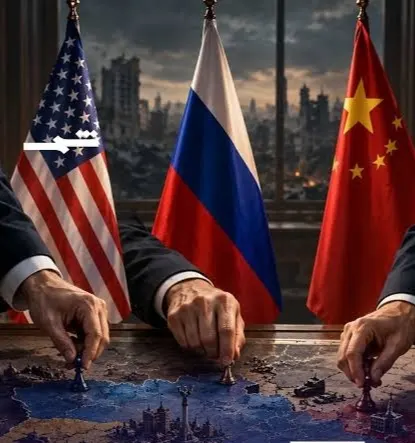
An analytical reading of the intersecting interests of major powers, the role of China, and the prospects for a settlement or an escalation of the confrontation.
Are we witnessing major understandings, or merely an intersection of interests?
The international order is currently navigating a highly complex phase, characterized by an intertwining of wars and negotiations. In this environment, military and economic maneuvers are being leveraged as bargaining chips in conflicts that extend well beyond the borders of the nation's directly involved. Against this backdrop, a critical strategic question arises: Could the Russo-Ukrainian war, the confrontation with Iran, and the security of the Gulf and the Red Sea evolve into interconnected issues within broader understandings among major powers—whereby Washington and Moscow might exchange concessions or gains across multiple theaters?
This question lies at the heart of the "Grand Bargain" hypothesis—a concept that warrants analysis, rather than being treated as an established fact or a definitive conclusion.
On October 19, 2026, the Kremlin announced that the possibility of a trilateral meeting—involving U.S. President Donald Trump, Russian President Vladimir Putin, and Chinese President Xi japing—had been raised for discussion on the sidelines of the Asia-Pacific Economic Cooperation (APEC) summit in China, scheduled for November. No concrete agreement regarding the meeting or its agenda was reached. Reports suggested that the idea for the gathering was linked to discussions on ways to end the war in Ukraine. While this development adds weight to questions regarding the potential for an understanding between these three powers, it does not confirm the existence of any secret agreement concerning Ukraine or Iran.
Addressing this requires distinguishing between three levels: publicly stated facts, interests that can be inferred from the behavior of these states, and hypotheses that require further evidence. The existence of a shared interest does not imply an agreement on a specific deal, nor does the temporal coincidence of events prove that one is the price paid for another.
Consequently, this article explores the following questions: What might Washington offer Moscow, and what might it demand in return? Where does Beijing fit into any potential understanding? Do the interests of these parties allow for an interconnected trade-off, or will their divergent objectives preclude such an outcome?
First: Washington and Moscow—what cards might be brought into a trade-off?
US-Russian relations are not defined solely by the dispute over Ukraine; they also encompass economic sanctions, European security, nuclear armament, energy, and the competition for international influence. Therefore, understanding the possibility of a trade-off begins with identifying the interests that each side can leverage in negotiations.
What might Washington seek to obtain from Moscow?
Three potential American demands can be envisioned: making progress toward ending the Russia-Ukraine war—or establishing arrangements that limit the likelihood of its resurgence—mitigating the risks associated with Russian-Iranian military cooperation (provided this can be achieved through verifiable understandings), and maintaining the stability of energy markets and maritime corridors while preventing the conflict from widening.
As for what Washington might offer, this could, in principle, include exploring the easing of certain sanctions as part of an agreed-upon settlement, discussing specific security arrangements, or reopening channels of cooperation on particular issues. However, these remain possibilities for negotiation rather than firm American offers or agreed-upon concessions.
What does Moscow want in return?
Russia seeks to improve its strategic position, mitigate the impact of sanctions, secure arrangements regarding the future and security of Ukraine, and reduce Western military and political pressure; it may view any understanding with Washington as an opportunity to achieve some of these objectives.
However, Moscow cannot guarantee that Kyiv or European capitals will accept a settlement that compromises their own security and interests. Furthermore, the lifting or easing of sanctions is contingent upon specific legal and political procedures; it cannot be assumed that an agreement between two heads of state would automatically lead to their complete removal.
Consequently, the hypothetical scenario worth exploring is not a direct "swap" of Ukraine for Iran, but rather the potential for a gradual negotiation process in which issues concerning a settlement in Ukraine, sanctions, and security cooperation become intertwined.
This leaves a critical question: are there documented indications of mutual commitments regarding these matters, or does the talk of a "trade-off" merely reflect an analytical assessment of the respective interests involved?
Second: Ukraine—might it become a bargaining chip between major powers?
The Russia-Ukraine war remains one of the most complex issues in any potential U.S.-Russia understanding, as it touches upon territory, sovereignty, security guarantees, and the future of the relationship between Russia and Europe.
Reports regarding a possible trilateral meeting in China have suggested that the war in Ukraine might be discussed—at a time when Moscow and Kyiv remain at odds over the terms of a settlement. The Kremlin has emphasized that no final agreement could be reached without the participation of the Ukrainian side.
From an analytical perspective, Washington might view ending the war—or at least curbing its costs—as an opportunity to redirect attention and resources toward other issues. Moscow, meanwhile, might see an agreement as a way to address sanctions and improve its international standing.
However, these potential interests do not mean that Ukraine has become merely a pawn in the hands of Washington and Moscow. Any settlement affecting its territory or security requires Ukraine’s own participation; furthermore, the stance of European nations will influence the implementation of security guarantees and the future of relations with Russia.
It is also important not to assume that reaching an understanding on Ukraine would automatically lead to a shift in Russian policy toward Iran. Moscow may have independent interests in its relationship with Tehran, viewing cooperation with the latter as beneficial to its own security and regional position.
Therefore, a key indicator to watch is whether negotiations concerning Ukraine are accompanied by verifiable changes in Russia’s position on sanctions, military cooperation, or international security issues. Only then would the hypothesis of a linkage between these files be grounded in concrete facts, rather than mere political coincidence.
Third: Iran—could it become a bargaining chip in U.S.-Russian negotiations?
The Iranian dossier serves as a focal point for the "grand bargain" hypothesis, given its entanglement with military confrontation, the nuclear program, the security of the Strait of Hormuz, energy markets, and Tehran’s relations with both Moscow and Beijing.
On October 18, 2026, Reuters reported that Iran had kept an offer on the table for the United States to reopen the Strait of Hormuz for a specified period—contingent upon conditions related to the lifting of blockades and sanctions, as well as a cessation of hostilities. The coverage noted that disagreements persisted regarding whether the nuclear program should be addressed as a priority, as well as the terms for resuming negotiations.
While these details underscore the complexity of the Iranian file, they do not prove that Moscow is using Tehran as a bargaining chip in its negotiations with Washington, nor that it has agreed to withdraw its support in exchange for American concessions.
Nevertheless, there is an analytical perspective worth exploring. A report issued by The Soufan Center on October 16, 2026, suggested that great-power rivalry is intersecting with the conflict involving Iran. It noted that Moscow and Beijing are attempting to balance their ties with Tehran against their broader interests concerning Washington and the Gulf states. The report further posited that Russia might view its relationship with Iran as a lever—one that could influence its calculations regarding sanctions and the terms for a potential settlement in Ukraine.
This assessment, originating from a research center, does not constitute evidence of an actual deal; however, it illustrates how a "grand bargain" hypothesis can emerge from the convergence of interests—even in the absence of formal, public agreements linking these various issues.
In this light, the following questions can be raised:
- Could Washington ask Moscow to limit certain forms of military cooperation with Iran, in exchange for considering the easing of specific sanctions or reaching understandings on other issues?
- Does Moscow view maintaining its relationship with Tehran as more important than any potential gains from negotiations with Washington?
- Can the United States offer concessions regarding sanctions or Ukraine without encountering domestic opposition or friction with its allies?
- Would Iran accept a settlement that limits some of its capabilities or alters its security arrangements if it does not receive credible guarantees?
These are legitimate questions for analysis; however, answering them requires documented statements, formal agreements, or reliable reports that clearly demonstrate a linkage between these issues.
Furthermore, it is essential to distinguish between reducing Russian-Iranian military cooperation, reaching a nuclear agreement, and achieving regime change in Iran—these are distinct matters, and there is no basis to assume that one is an inevitable consequence of another.
Fourth: China—a potential partner in a settlement, or a power protecting its own interests?
The hypothesis of a "grand bargain" cannot be evaluated without considering China. Beijing is no marginal player in the international balance of power; rather, it is an economic, political, and military force that seeks to safeguard its interests and strengthen its position within the global order.
The Asia-Pacific Economic Cooperation (APEC) leaders' meeting is scheduled to take place in China in November 2026. This could potentially provide a framework for communication between leaders, should a trilateral meeting be agreed upon; however, the Kremlin has clarified that no formal agreement for such a meeting has been reached, nor has its agenda been finalized.
China’s potential participation does not necessarily imply that it would endorse a U.S.-Russia "swap" or grand bargain. While Beijing may seek to de-escalate international tensions and safeguard trade and energy interests, it remains wary of any arrangements that might expand U.S. influence at the expense of its own interests.
Furthermore, China maintains economic and strategic ties with Russia, Iran, and the Gulf states—a reality that complicates its decision-making process. While Beijing stands to benefit from stable energy markets and secure maritime corridors, it may also perceive that the ongoing rivalry between Washington and Moscow affords it greater room for maneuver.
Beijing could potentially facilitate dialogue or support specific understandings without becoming a party to a comprehensive deal. It might prefer to address individual issues separately to avoid the burden of commitments that do not align with its own interests.
Consequently, any assessment of China’s potential role should be based on its stated positions, the initiatives it puts forward, and whether it would be willing to accept clear obligations regarding the implementation of any agreement. To assume that China would participate in a major "swap" simply because it might attend a trilateral meeting is a conclusion that goes beyond the available evidence.
Fifth: U.S. Military Buildup—A Tool for Pressure or a Sign of Imminent Confrontation?
U.S. military movements remain a significant factor in interpreting negotiations; however, they do not carry a single, definitive meaning. Washington may employ military deployments to deter adversaries, protect its forces and maritime corridors, strengthen its negotiating position, or prepare for the potential collapse of diplomatic efforts.
On October 16, the U.S. Naval Institute reported the arrival of the aircraft carrier USS Theodore Roosevelt at the port of Yokosuka, Japan, in preparation for joint military exercises. This contradicts claims that the vessel had departed for the Middle East—a notion not supported by the aforementioned source.
This example underscores the importance of verifying the specifics of military movements before linking them to developments in the Middle East or interpreting them as evidence of a decision to go to war.
Conversely, the significance of military deployments should not be downplayed when they coincide with explicit threats or specific operational arrangements. A rigorous analysis requires tracking the nature, positioning, and stated missions of these forces, alongside the prevailing political stances and the trajectory of negotiations.
In the context of a potential "trade-off" scenario, such movements are significant because they can influence the calculations of the parties involved. While increased pressure might compel an adversary to negotiate, it could also exacerbate their security concerns and drive them toward a more hardline position.
This raises a further question: Is military pressure being used to pave the way for a settlement, or is it part of an active preparation for a continued confrontation? The answer cannot be determined based solely on the presence of naval vessels; rather, it requires a combination of consistent indicators.
Sixth: Saudi Arabia, the Gulf, and Yemen—Do Understandings Extend Beyond the Major Powers?
Saudi Arabia and the Gulf states hold direct significance in any scenario involving Iran, the Strait of Hormuz, and the Red Sea. These nations are not merely passive parties affected by the outcomes of U.S.-Russian rivalry; rather, they possess their own independent security, economic, and political interests.
On October 20, 2026, the British Ministry of Defence announced additional defensive support for Saudi Arabia. This includes the deployment of Typhoon fighter jets to carry out defensive missions—protecting cities and critical infrastructure from aerial attacks—alongside the provision of a military transport aircraft and military advisors. London emphasized that these fighter jets would serve a purely defensive role and would not conduct offensive strikes against the Houthis.
While this move underscores the importance of shielding Saudi Arabia from attacks, it does not indicate that Britain or the United States has decided to launch a large-scale offensive campaign, nor does it suggest the existence of an international agreement regarding the future of Iran.
As for Yemen, it serves as an additional litmus test for any regional settlement. A reduction in tensions between Iran and the United States might lower the risk of escalation in the Red Sea, but it would not automatically resolve the conflict in Yemen or address its underlying political and economic causes.
The future of Yemen should not be reduced to the relationship between Tehran and Washington, nor should the Yemeni people be treated as secondary actors in any external arrangement. A sustainable settlement requires the participation of the relevant Yemeni parties, the protection of civilians, the restoration of state institutions, and the assurance of secure navigation. Consequently, any potential international trade-off will face a practical test: will it lead to a reduction in attacks and tensions, or will it merely serve to align the interests of major powers without addressing local conflicts?
The security of Saudi Arabia and the Gulf states, as well as the stability of Yemen, must be integral to any political resolution—not merely collateral outcomes of agreements in whose formulation the concerned parties have had no say.
Seventh: What evidence supports the existence of a "grand bargain"?
For the "grand bargain" hypothesis to evolve from an analytical possibility into a more firmly established conclusion, it is necessary to identify the indicators that could either support or undermine it.
The first indicator: the declared or documented link between files
If credible statements or documents emerge suggesting that a concession regarding Ukraine is linked to a specific Russian stance on Iran or sanctions, this would serve as significant evidence of a quid pro quo or an interconnected understanding; the mere existence of communications concerning both issues, however, is not sufficient.
The second indicator: identifiable mutual concessions
It is essential to understand what each party offers and what it receives in return; major agreements are not measured by statements alone, but rather by the clear commitments and specific interests they entail.
Third Indicator: A Tangible Shift in Policies
If the positions of the parties regarding sanctions, military support, or the terms of a settlement shift—coinciding with documented progress in other areas—it may warrant an investigation into whether a connection exists between these developments. Nevertheless, alternative explanations should be examined before concluding that a deal has been reached.
Fourth Indicator: Implementation and Verification Mechanisms
Serious agreements typically entail procedures or arrangements that allow for the monitoring of their implementation. Therefore, the existence of clear mechanisms, joint statements, or synchronized and publicly announced steps is far more significant than unconfirmed leaks.
Fifth Indicator: The Positions of Affected Parties
Ukraine, Iran, Saudi Arabia, the Gulf States, and European nations cannot be overlooked when assessing any understanding that impacts their security and interests; these parties might reject the outcomes of a potential deal or impose conditions that prevent its implementation.
Based on these criteria, it can be argued that the "grand bargain" hypothesis warrants investigation; however, it should not be presented as an established agreement unless evidence emerges that goes beyond mere coincidence and overlapping interests.
Eighth: Potential Scenarios—A Gradual Settlement, Continued Pressure, or a Wider Eruption?
In light of the available data, three main paths can be envisioned, though none should be considered a certain outcome.
Scenario One: Gradual Understandings Among Major Powers
Diplomatic contacts might succeed in achieving partial progress regarding Ukraine, establishing a more stable negotiating track concerning Iran, or putting in place arrangements to protect maritime navigation. While these paths may intersect at certain points, they would not constitute a single, comprehensive deal.
Second scenario: Continued negotiation under the pressure of force
The parties may continue to bolster their military capabilities while keeping channels of communication open, with the aim of improving their respective negotiating positions. In this scenario, diplomacy could coexist with military readiness for an extended period, without necessarily leading to a final agreement or an all-out war.
Third Scenario: Stalled Negotiations and an Escalating Confrontation
Should political efforts fail, attacks intensify, and the parties prove unable to restrain their responses, military operations could expand—increasing risks to the Gulf, energy markets, and international shipping. Ukraine might also be affected as the priorities and resources of major powers shift; however, the scale and direction of such an impact remain contingent upon developments that have yet to unfold.
A serious analysis does not seek to predetermine a winner or a loser; rather, it aims to identify the conditions that could make each path possible, as well as the indicators that signal a transition from one phase of events to the next.
The question remains: might these intertwined crises evolve into a grand bargain?
The hypothesis of a "grand bargain" between Trump and Putin derives its significance from the overlapping interests of the United States and Russia—spanning Ukraine, Iran, sanctions, energy, and international security—as well as the potential for China to either influence the path toward an understanding or further complicate it.
The strength of this hypothesis does not lie in the mere assumption that a secret deal exists, but rather in the ability to test it: What might Washington offer Moscow, and what might it demand in return? What interests might drive Beijing to facilitate—or hinder—such an understanding? And what evidence could distinguish an actual agreement from a mere convergence of interests?
Answering these questions requires a careful examination of statements, agreements, and shifts in political and military conduct—while distinguishing between established facts, assessments, and hypothetical scenarios.
Diplomacy may succeed in transforming certain crises into opportunities for settlement; negotiations might persist under the pressure of force without achieving a decisive breakthrough; or, conversely, a breakdown in talks could lead to a broader escalation. In any case, the mere coincidence of events is not sufficient proof that a "trade-off" has taken place.
The overarching strategic question remains: Can major powers transform their rivalry into mutual understandings that reduce the risk of war—or will conflicting interests cause every crisis to become a source of leverage over others?
The "grand bargain" remains a hypothesis worthy of exploration and debate. However, confirming its existence requires clear evidence of an exchange of commitments and benefits. Until such evidence emerges, responsible analysis dictates that we keep this possibility open, continue to scrutinize the facts, and avoid prematurely presenting tentative conclusions as established truths.
Sources:
- Reuters, October 19, 2026: Kremlin says Putin, Trump, and Xi could hold a three-way meeting in China next month. The report discusses the possibility of such a three-way meeting, noting that no specific agreement or agenda has been set, and outlines Moscow’s position regarding the necessity of Kyiv’s participation in a final settlement.
- https://www.reuters.com/world/china/kremlin-says-putin-trump-xi-could-hold-three-way-meeting-china-next-month-2026-10-19/
- Reuters, October 18, 2026: Iran urges US to accept proposal to reopen Strait of Hormuz. This covers the Iranian proposal to reopen the Strait of Hormuz, the conditions related to the blockade, sanctions, and a cessation of hostilities, as well as the dispute over the priority to be given to the nuclear dossier.
- https://www.reuters.com/world/middle-east/iran-urges-us-accept-proposal-reopen-strait-hormuz-2026-10-18/
- The Soufan Center, October 16, 2026: "Great Power Competition Fuels Iran’s War Effort." An analysis of the relationship between the rivalry among the U.S., Russia, and China and the war in Iran, as well as the interests of Moscow and Beijing in balancing their relations with Tehran, Washington, and the Gulf states.
- https://thesoufancenter.org/intelbrief-2026-october-16/
- Asia-Pacific Economic Cooperation (APEC): The official website of the forum, providing information on the 2026 summit and leaders' meetings.
- https://www.apec.org/
- U.S. Naval Institute (USNI News), October 16, 2026: "Carrier USS Theodore Roosevelt Arrives in Japan Ahead of Keen Sword Exercise." This report documents the aircraft carrier’s arrival in Yokosuka and notes its scheduled participation in joint exercises with Japan.
- https://news.usni.org/2026/10/16/carrier-uss-theodore-roosevelt-arrives-in-japan-ahead-of-keen-sword-exercise
- UK Ministry of Defence, October 20, 2026: "Operational update 20 October – UK military support to the Kingdom of Saudi Arabia." An official statement regarding defense support for Saudi Arabia, the missions of Typhoon fighter jets, and the nature of the UK’s stated role.
- https://www.gov.uk/government/news/operational-update-20-october-uk-military-support-to-the-kingdom-of-saudi-arabia