
The Energy War and the Global Winter: Who Pays the Price of the Conflict?
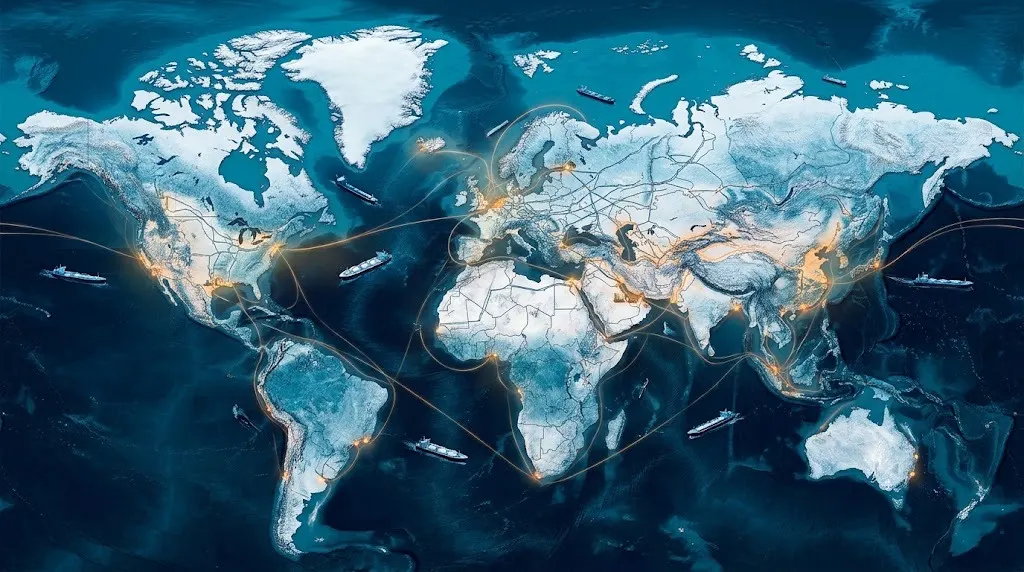
Conflicts in the Middle East are no longer merely military confrontations confined to specific geographic areas; they have evolved into a true test of global energy security, international economic stability
, and the ability of nations to shield their populations from the repercussions of war. When oil and gas supplies and shipping lanes are jeopardized, the consequences do not remain within the borders of the warring nations but extend to Europe, Asia, Russia, Ukraine, and all markets reliant on the stable flow of energy and raw materials.
As winter approaches in the Northern Hemisphere, this equation becomes increasingly sensitive. Energy is not simply a commodity governed by the laws of supply and demand; it is a fundamental component of national, social, and industrial security—as well as a strategic lever of pressure, the economic impact of which can escalate into political and social crises within affected nations.
First: The European Winter and the Energy Security Test
Europe enters the winter season facing challenges regarding gas storage levels, import costs, supply security, and global market volatility. While the European Union possesses broader options for diversifying energy sources and importing liquefied natural gas (LNG), this does not eliminate the risks of price spikes or additional market strain should disruptions persist.
On October 8, 2026, the European Commission announced that the European gas system is sufficiently resilient to meet projected winter demand, despite storage levels falling below historical averages. A report by the European Network of Transmission System Operators for Gas (ENTSOG) indicated that storage levels stood at 72% on October 1, while emphasizing the importance of maintaining LNG flows and monitoring reserve levels throughout the season.
Herein lies the core issue: while Europe may not face a total energy blackout, persistently high prices could force low-income households to make difficult choices between the costs of heating, food, and housing, all while governments shoulder the additional burden of alleviating pressure on their citizens.
Secondly: Russia and Ukraine—Energy at the Heart of the Confrontation
The European energy crisis cannot be viewed in isolation from the Russia-Ukraine war and the resulting shifts in gas and oil trade, the redirection of supplies, and the strain placed on energy infrastructure.
Ukraine faces ongoing challenges in protecting electricity and heating facilities and meeting the population's needs during the cold months, while Russia remains a pivotal player in the global energy equation due to its standing in oil and gas markets.
However, the protracted war, sanctions, and the restructuring of trade routes compel the various parties to navigate complex economic calculations. It is a mistake to assume that rising prices yield net gains for any single party; while some exporters may benefit from increased revenues, other economies suffer from higher production, transport, and insurance costs, as well as a decline in industrial activity.
Thus, energy is transforming from a mere economic resource into a factor that shapes the balance of power, national resilience, and the terms of political negotiation.
Third: Industry and Trade—Losses Beyond the Fuel Bill
The most critical impact of the energy crisis is not limited to the price of a barrel of oil or a unit of gas; rather, it extends to the entire production ecosystem.
Rising electricity and fuel prices drive up factory operating costs, affecting industries such as chemicals, iron, cement, glass, and paper, while also placing pressure on the road, air, and maritime transport sectors.
The ripple effect widens to encompass fertilizers, agriculture, food processing, refrigeration, and storage. Costs are gradually passed on to the prices of finished goods, meaning citizens may effectively pay twice for the energy turmoil: once through bills for electricity, heating, and fuel, and again through higher prices for food, clothing, services, and imported goods.
Furthermore, rising shipping and maritime insurance costs—or the rerouting of vessels to avoid danger zones—can delay the arrival of raw materials and goods, disrupt production and distribution schedules, and undermine corporate competitiveness, particularly for small and medium-sized enterprises (SMEs).
In this context, national efforts to secure fuel supplies take on significance that extends well beyond energy markets alone. On October 9, 2026, Reuters reported that Germany plans to release up to 15 million barrels of diesel, heating oil, and crude oil as part of an international effort to alleviate fuel shortages and curb rising prices.
These developments underscore that energy security has become directly linked to the continuity of industry, agriculture, transportation, and international trade.
Fourth: Asia and Importing Economies—A Crisis Beyond Geographical Boundaries
The repercussions of energy market disruptions will not remain confined to Europe; Asian economies that import oil and gas face their own challenges in securing supplies for industry and power generation while maintaining the competitiveness of their exports.
Risks escalate when vital maritime corridors—foremost among them the Strait of Hormuz—face disruptions that threaten the flow of oil and liquefied natural gas (LNG). These straits are not merely lines on a map but lifelines for the global economy; any sustained disruption within them could reshape the distribution of energy and transport costs across continents.
Furthermore, developing economies—which possess limited financial capacity to absorb shocks—may find themselves facing a difficult dilemma: either shoulder the burden of rising import bills and the accompanying pressure on currencies and budgets, or cut subsidies and increase the financial strain on their citizens.
The risks extend beyond rising fuel prices to include potential shipment delays, increased insurance costs, shrinking corporate profit margins, and mounting inflationary pressures on domestic markets.
Fifth: Who benefits, and who pays the price?
The energy crisis necessitates distinguishing between short-term gains and long-term strategic losses.
While some energy-exporting nations and companies reap additional revenues when prices rise, importing countries and energy-intensive industries face mounting pressures regarding production, investment, and employment.
Conversely, certain sectors may benefit from the shift to alternative energy sources; however, this transition requires investment, infrastructure, and time, and cannot immediately replace all conventional supplies.
As for the average citizen, they are the most vulnerable when rising energy costs coincide with spikes in the prices of food, housing, and transportation, alongside a decline in job opportunities.
Consequently, managing the crisis becomes both an economic and social responsibility—not merely a technical matter for energy ministries. Governments are called upon to balance the need to secure supplies with the protection of the most affected groups, while avoiding measures that shift the financial burden onto citizens without addressing the root causes of the crisis.
Sixth: The Middle East and Iraq
The Middle East lies at the heart of the equation balancing the importance of resources against the risks of relying on them, owing to its geographic location and the significance of its resources and maritime routes to international energy trade. However, possessing oil and gas does not automatically guarantee immunity from crises; producer nations themselves can suffer from export disruptions, declining investments, or rising costs for imports, insurance, and transportation.
For Iraq, any prolonged disruption in energy markets or export routes necessitates a review of economic policies, the strengthening of financial reserves, the safeguarding of continuous production and exports, infrastructure development, and a reduction in excessive reliance on oil revenues.
Furthermore, while rising oil prices may generate additional revenue under certain conditions, they do not automatically guarantee an improvement in citizens' living standards. The true benchmark lies in how revenues are managed, how corruption is combated, and how resources are transformed into services, job opportunities, and sustainable productive investments.
Iraq requires an economic policy that anticipates crises before they occur, rather than one that waits for price fluctuations to reorder priorities. Moreover, economic diversification, the strengthening of domestic production, improved energy efficiency, and the development of the agricultural, industrial, and transport sectors are essential elements for reducing the country's vulnerability to external shocks.
Seventh: Where is the crisis heading?
It is impossible to state with certainty that the world is inevitably facing a comprehensive energy crisis; at the same time, one cannot downplay the risks posed by continued military and maritime disruptions throughout the winter season.
Potential scenarios range from containing tensions and gradually restoring supply flows—or enduring persistent uncertainty and rising energy costs—to a far more dangerous scenario involving an escalation of hostilities or significant damage to key production and export facilities.
Outcomes will depend on the duration of the disruptions, the volume of available supplies, temperature levels, and the ability of nations to utilize reserves and diversify sources, as well as government decisions regarding inflation and production costs.
Consequently, betting on an imminent end to the crisis without reliable indicators could prove costly, just as alarmism unsupported by data could exacerbate market volatility. What is required is a realistic assessment of the various scenarios and preparedness for each, alongside close monitoring of economic indicators, energy prices, storage levels, and international trade flows.
Eighth: Energy Security is an International Responsibility
The most critical insight revealed by energy crises is that the world—despite political and military rivalries—remains economically interconnected in such a way that the repercussions of conflict extend far beyond the immediate parties involved. A war may erupt in one region, yet its costs are felt in factories, ports, markets, and households across other continents.
Consequently, protecting energy and trade corridors, avoiding attacks on civilian infrastructure, ensuring the continuity of supplies, and fostering international cooperation are not merely economic interests; they are essential for safeguarding social stability and human security.
The question that should occupy the minds of decision-makers remains: Will energy become a tool for mutual leverage that drains economies and burdens populations? Or will mounting risks drive nations toward settlements that guarantee supply security and mitigate the costs of conflict?
In a world reliant on energy for heating, production, transportation, and food, the consequences of war are measured not only by the outcomes achieved by the warring parties but also by the burdens imposed on millions of people who—despite having no say in the decision to go to war—bear a significant share of its cost.
Sources and References:
European Commission, "EU gas system prepared for winter despite lower storage levels," October 8, 2026.
European Network of Transmission System Operators for Gas (ENTSOG), "Gas supply outlook for winter 2026–2027," October 8, 2026.
https://www.entsog.eu/media/38034
Reuters, "Germany plans to release up to 15 million barrels of oil under G7 plan," October 9, 2026.