
Straits: The Weapon of the Twenty-First Century.
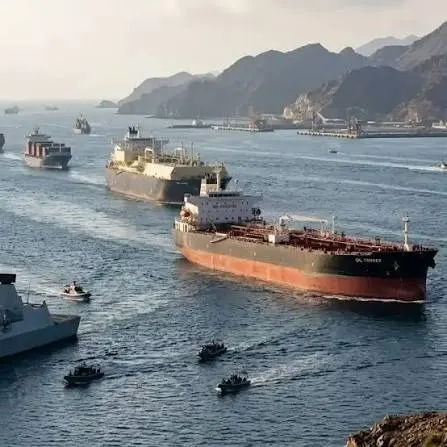
In today’s world, wars are no longer always decided on the battlefield, nor are national power measured solely by the number of troops and weapons. A different front has emerged—quieter, yet far more impactful on the lives of peoples and national economies: the front of energy, maritime corridors, and the arteries of global trade.
Situated in a region that serves as a vital global energy source, the Straits of Hormuz and Bab al-Mandab, along with the Suez Canal, stand at the center of a complex strategic equation. Any tension arising there does not remain confined to the region; its impact can ripple outward to affect oil and gas prices, transport and insurance costs, and supply chains, ultimately influencing the global economy.
From this perspective, the regional landscape can be viewed through several lenses:
- Straits are no longer merely maritime passages; they have become strategic assets capable of influencing the flow of energy and international trade.
- The mere threat of disruption can be enough to cause attrition; a strait need not be fully closed for risks and costs to rise, as even navigation disruptions or heightened threat levels can alter market calculations.
- Hormuz and Bab al-Mandab lie at the heart of the regional equation; any disturbance in either could trigger repercussions that extend far beyond the region to global markets.
- Energy has become an instrument of conflict, no longer an economic issue isolated from security, politics, and international influence.
- The Arab region bears a significant share of the risk, as it sits at the crossroads of energy and trade routes, making regional stability directly linked to the security of these maritime corridors. • Iraq is not removed from this equation; its economy, oil exports, and the region's sensitivity to energy prices make the stability of trade and energy routes a crucial factor in its economic security.
- Alternatives exist, yet they are not limitless; while pipelines and alternative corridors can mitigate certain risks, they do not negate the strategic importance of key maritime routes.
Ultimately, the most significant shift in the concept of international power may be that control no longer necessarily implies territorial occupation, but rather the ability to influence the flow of energy, trade, and the economy.
This raises the most critical question:
Has the world entered an era where controlling the arteries of the economy is more important than controlling the land itself?
If the answer is taking shape before us today, our region will undoubtedly be one of the primary arenas where this equation is put to the test.