
What Comes Next…A Summit of Giants?
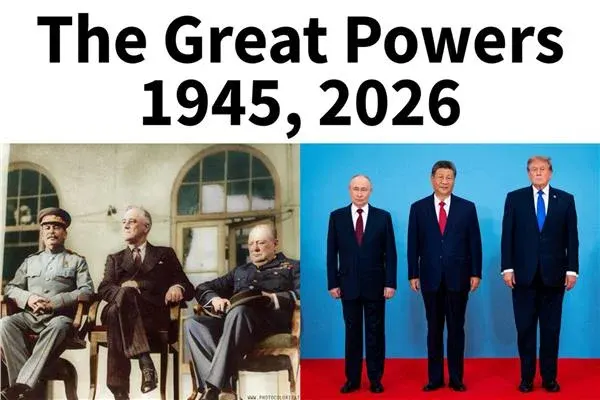
An analytical look at the balance of power, the future of the international order, and the Iranian crisis.
When the "great powers" meet, do the rules of the international game change? or not
The summit that brought together U.S. President Donald Trump, Russian President Vladimir Putin, and Chinese President Xi Jinxing in the Chinese city of Shenzhen on November 19, 2026, was no mere routine political encounter. Rather, it served as an extraordinary milestone in international relations, given the stature of the participants and the magnitude of their influence on the global balance of power.
The direct, trilateral meeting of leaders from the three nations possessing the greatest nuclear capabilities—along with the most significant strategic and economic influence—raises questions that transcend diplomatic rhetoric and joint communiqués. These questions concern the future of the international order, the limits of great-power rivalry, and the potential for reaching understandings that could redefine the rules for managing crises and conflicts.
Yet, the true significance of the summit lies not in the event itself, but in its substance—or, more precisely, in the notable absence of clear agreements regarding the most pressing international crises, foremost among them the Russia-Ukraine war and the U.S.-Israeli confrontation with Iran.
Are we witnessing the dawn of a new international understanding among the great powers, or is this merely an attempt to manage rivalry and avoid direct confrontation—while the struggle for influence and the sources of power continues unabated?
Answering this requires a careful examination of the positions held by the three parties, an analysis of their strategic interests, and an assessment of the summit’s outcomes in the context of the regional and international developments that preceded and followed it.
First: The Joint Declaration—What did the three powers actually agree upon?
The summit resulted in a joint statement titled "Declaration Toward Peace," which encompassed four key pillars:
- A commitment to reforming the United Nations to enhance its capacity to address international challenges and ensure peace and security.
- Increasing the production and supply of refined petroleum products, while emphasizing the importance of stable energy flows.
- Reaffirming the importance of state consent and respect for the immunity of state officials, while cautioning against the misuse of jurisdiction by the International Criminal Court (ICC) and similar institutions.
- Affirming that a nuclear war cannot be won and must never be fought, alongside a commitment to engage in dialogue on reducing nuclear risks and preventing proliferation.
However, a closer reading of the declaration reveals a clear gap between the significance of the stated principles and the limited nature of the actionable commitments.
The declaration lacks a timeline for nuclear arms control negotiations, fails to establish binding mechanisms for the proposed UN reforms, and offers no explicit resolution to the war in Ukraine or the crisis involving Iran.
This highlights the most significant political implication: while the three powers reached an agreement on broad themes representing shared interests, they did not provide concrete solutions for issues where their interests directly conflict. The declaration serves as a political foundation for dialogue, rather than a comprehensive strategic agreement or a new alliance among the three parties.
Second: China—A Strategic Gain in Solidifying Its International Standing
The outcomes of the summit cannot be fully understood without examining the role of China, which appears to have secured one of the most significant diplomatic gains from the meeting.
Xi Jinping’s hosting of both the American and Russian presidents demonstrates Beijing’s capacity to bring together two powers whose interests often diverge from its own. It underscores that China is no longer merely an emerging economic power, but has become a central player in any discourse concerning the future of international security.
China’s gain should not be reduced to mere optics or the successful hosting of the event; rather, Beijing is seeking to establish an international framework that allows it to expand its economic, technological, and political influence, all while avoiding large-scale military or economic confrontations that could jeopardize its growth and commercial interests.
Its approach is rooted in balancing the expansion of influence with the maintenance of stability—leveraging the rivalry between the United States and Russia without having to shoulder the burden of resolving every conflict.
Furthermore, the summit declaration’s focus on energy, institutional reform, and the mitigation of nuclear risks aligns with China’s interests in ensuring the stability of international trade and supply chains.
While the evidence suggests that China emerged with a notable diplomatic achievement, it did not secure American recognition of specific spheres of influence, nor did it extract any explicit agreement on the strategic issues that remain points of contention between Beijing and Washington.
Third: Russia—Restoring International Presence Without Resolving Outstanding Issues
For Moscow, the meeting represents a significant opportunity to reaffirm its place at the table of major powers—especially in light of the ongoing war in Ukraine, Western sanctions, and various political and economic pressures.
President Putin managed to participate in a high-level international gathering alongside the American and Chinese presidents, providing him with a political and symbolic gain as he counters attempts to isolate Russia internationally.
However, this presence does not signify that Russia has achieved a strategic victory, nor has it secured any clear concessions from the U.S. regarding Ukraine.
Notably, the final statement included no agreement to end the war or establish a ceasefire, nor did it outline a binding path for negotiations.
Furthermore, the leaders' agreement to increase the supply of refined petroleum products raises questions about the potential impact on energy markets and existing sanctions; yet, this alone is insufficient to conclude that there is an agreement to lift sanctions against Russia.
In short, while Moscow has succeeded in restoring its diplomatic presence, it still faces a genuine challenge: translating this presence into tangible political and security outcomes—particularly concerning the situation in Ukraine.
Fourth: The United States—a policy of negotiating from a position of strength, or a reordering of priorities?
Trump enters this phase seeking to portray himself as capable of opening channels of negotiation with adversaries and achieving breakthroughs on issues that have remained deadlocked for years.
However, international politics is not managed through personal meetings alone; direct rapport between leaders is insufficient to overcome the strategic contradictions that exist between nations. The United States aims to maintain its global preeminence, ensure the security of its allies, and constrain the strategic expansion of its rivals—most notably China and Russia.
At the same time, Washington faces the challenge of managing multiple volatile international issues without exhausting its own military, economic, and political resources.
In this context, Trump’s participation in the summit can be understood as an attempt to use direct diplomacy to alleviate certain tensions and keep the United States in a position to influence the trajectory of these crises.
Yet, a crucial point warrants attention: diplomatic rapprochement with Moscow and Beijing does not necessarily imply the reaching of understandings regarding their conflicting interests with Washington.
Furthermore, the absence of concrete, actionable agreements at the summit raises questions about the U.S. administration’s ability to translate political rhetoric into sustainable outcomes.
Trump seeks to secure negotiating gains at the lowest possible cost; however, the success of this approach will ultimately depend on the willingness of his adversaries to offer reciprocal concessions—not merely on the convening of summits themselves.
Fifth: Iran—The Issue That Revealed the Limits of Understanding Among Major Powers
The Iranian dossier stands out as one of the most sensitive topics when analyzing the summit’s outcomes, given its implications for regional security, energy markets, and maritime corridors—not to mention the complex, overlapping interests of the United States, Russia, and China.
Notably, the trilateral statement did not include a declared, unified position on Iran, even though the confrontation involving the U.S., Israel, and Iran remains one of the most prominent crises preoccupying the international community.
However, it is essential to distinguish between the absence of this issue from the official statement and the possibility that it was not discussed during the talks; the available information is insufficient to definitively state what transpired in all the closed-door sessions.
To understand the positions of these three powers, one must examine the specific interests of each:
- The United States seeks to achieve its security and strategic objectives—primarily preventing Iran from acquiring nuclear weapons—while safeguarding the security of its allies and its own regional interests, all while avoiding an escalation into a prolonged and costly war.
- Russia views the Iranian issue through the lens of regional balances and its own political and security interests. It aims to maintain its standing within the Middle Eastern equation, though this does not imply a willingness to engage in a direct confrontation with the United States in defense of Iran.
- China’s interests are tied to the stability of energy supplies, trade, and maritime navigation; therefore, the continuation or expansion of the confrontation poses a direct threat to its economic and strategic interests.
This highlights a crucial point: there is insufficient evidence to suggest that the three powers reached a consensus regarding Iran’s future, nor is there any proof that they agreed to leave the handling of this file to any single party. Thus, the future of the crisis will remain linked to developments on the ground, the positions of regional actors, and the seriousness of diplomatic mediation efforts.
Sixth: The G7 – A Distinct Stance on Iran and Maritime Security
In a significant development preceding the trilateral summit, the G7 foreign ministers issued a joint statement on November 11, following their meeting in Paris on November 9–10.
The statement articulated a clear position on the Iranian dossier, affirming support for diplomatic efforts to reach a lasting settlement that addresses international concerns regarding Iran’s nuclear program and contributes to regional security. Simultaneously, it emphasized continued coordination to exert economic and political pressure on Tehran should a diplomatic solution prove unattainable. The statement also addressed security in the Strait of Hormuz and freedom of navigation, condemning attacks on civilian vessels and underscoring the necessity of ensuring safe passage, free from the imposition of unlawful tolls or restrictions.
The significance of this statement lies in the fact that it presents a more detailed international position on the Iranian issue compared to the trilateral declaration. However, the G7 should not be viewed as a monolithic bloc with identical military options; the stated positions regarding the protection of navigation do not necessarily imply an agreement to engage in—or a consensus on the timing of—military operations.
While the trilateral summit focused on broad principles and the management of relations among major powers, the G7 offered a more specific stance regarding Iran and maritime security—a reflection of the differing priorities and instruments employed by the two groups.
Seventh: Qatar – Regional Mediation Amidst Escalation
On November 21, statements by Iranian Deputy Foreign Minister Kazem Gharibabadi revealed that a Qatari delegation had visited Tehran and held discussions with Iranian officials, which lasted approximately two hours. The Iranian official noted that communication with mediators—including Qatar—is ongoing, with the aim of creating a new opening for diplomacy in regional conflicts. This development is politically significant, as it demonstrates that channels of communication have remained open despite the persistence of war and tensions.
Qatar maintains relationships and communication channels with opposing parties, enabling it to relay messages and lay the groundwork for negotiations. However, this visit should not be interpreted as a definitive sign that an agreement is imminent; no final outcomes or binding understandings have been announced. Its importance lies in keeping the political track open—a matter of particular urgency given the rising costs of confrontation for both the countries of the region and the global economy.
Regional mediation efforts could become a decisive factor in shaping the trajectory of the crisis, provided that the parties involved possess the political will to shift from managing escalation toward seeking a settlement.
Eighth: Arab States—Between the Challenges of Conflict and Opportunities for Influence
Any understanding—or disagreement—among major powers inevitably affects the interests of Arab states, especially given that the region serves as a vital hub for energy production and international trade.
The primary challenge, however, lies not only in the potential for an expanded military confrontation but also in the risk that regional security and political arrangements might be crafted without the genuine participation of the states most directly affected.
For the Arab world, the objective should not be to automatically align with any single international power, nor to withdraw from strategic partnerships. Instead, it requires the development of a balanced position rooted in shared national interests—an approach that entails three key courses of action:
- Strengthening Arab coordination regarding maritime and energy security, as well as the protection of critical infrastructure.
- Rejecting the use of Arab lands, airspace, and waters as an arena for settling regional and international scores.
- Expanding the Arab diplomatic presence in any negotiations concerning the future of regional security.
Furthermore, the Arab states’ possession of energy resources, strategic geographical locations, and diverse international relations provides them with leverage that can be utilized to protect their interests.
However, transforming these assets into political power requires effective coordination, a shared vision, and the ability to adopt balanced positions—moving beyond mere reactive, short-term responses.
In this context, Arab states must shift from being passive subjects of international decisions to active participants in shaping the arrangements that affect their own security and interests.
Ninth: Strategic Scenarios Post-Summit—Where Is the International Order Heading?
Assessing the coming phase requires looking beyond conventional expectations; it necessitates an examination of the conflicting interests among major powers and their capacity to manage crises without sliding into a broader international confrontation.
The trilateral summit did not result in a strategic alliance between Washington, Moscow, and Beijing, nor did it establish a new international order. It did, however, reveal common interests—such as energy stability, the mitigation of nuclear risks, and the re-evaluation of the role of international institutions—upon which future cooperation could be built. Conversely, it also exposed fundamental, unresolved disagreements. Consequently, the future of the international order hinges on four primary scenarios:
Scenario One: Gradual International Understandings and the Recalibration of Rivalry
This scenario is predicated on the three powers—the United States, Russia, and China—realizing that the costs of direct confrontation now outweigh any potential gains, and that the persistence of open conflicts threatens to weaken all parties economically, militarily, and politically.
Under this trajectory, Washington, Moscow, and Beijing might move toward establishing partial understandings. While falling short of a formal alliance or strategic partnership, these arrangements would provide a common framework for managing disputes. Such understandings could include:
- Opening regular channels for negotiation regarding nuclear risks and the prevention of military miscalculation.
- Reaching agreements on energy security, the stability of oil and gas supplies, and the security of maritime corridors.
- Revitalizing communications concerning the war in Ukraine, potentially creating conditions for a ceasefire or an interim settlement.
- De-escalating economic and trade confrontations, without necessarily ending the underlying technological and strategic rivalry.
- Utilizing international institutions to provide a political veneer for certain agreements.
The impact of this scenario on the international order could be the emergence of a phase of "regulated rivalry," where each power retains its interests and spheres of influence, supported by understandings that prevent disputes from spiraling into direct confrontation. This does not imply a return to the previous state of international stability; rather, it suggests the development of a new model for managing competition among major powers.
Furthermore, this path could raise concerns among small and medium-sized states, particularly if bilateral or trilateral understandings evolve into arrangements that dictate the outcome of international issues without the meaningful participation of the nations directly affected. At the regional level, this could pave the way for gradual settlements regarding the Iranian crisis and mitigate the risks of disruption to energy markets and maritime navigation; however, it would not necessarily guarantee that the root causes of security and political disputes are addressed.
While this scenario could foster a degree of international stability, its success would remain contingent upon the extent to which major powers honor these understandings—and refrain from exploiting them as a means to impose spheres of influence over others.
Second Scenario: Continued Indirect Confrontation and Crisis Management Without Resolution
This scenario is predicated on the persistence of rivalry among major powers—while avoiding direct war—through the use of political, economic, military, and technological leverage to secure gains.
In this context, the United States may continue to employ sanctions, military pressure, and alliances; Russia may seek to safeguard its strategic interests and expand its room for maneuver; and China may continue to bolster its economic and technological influence while reducing its vulnerability to U.S. pressure.
- This implies that a summit might serve as a framework for communication between adversaries, rather than a starting point for resolving their underlying disputes. Key features of this scenario include:
- The continuation of economic sanctions and competition over energy resources and markets.
- Intensifying rivalry in advanced technology, semiconductors, and artificial intelligence.
- Ongoing struggles for influence in strategically significant regions.
- The use of proxy wars and political or security-related pressures, stopping short of direct confrontation between nuclear-armed powers.
- The leveraging of international institutions and economic policy decisions as instruments to shift the balance of power.
The impact of this scenario on the international order would likely entrench a multipolar landscape—yet one lacking stable, established rules to govern relations between the various power centers. The international system would gradually evolve into an environment where temporary, ad hoc understandings coexist with persistent conflict, and where economic and technological security becomes core components of national security for states. As for the United Nations, it may face increasing difficulty in fulfilling its role—particularly if major powers agree to reform its institutions without reaching a genuine consensus on the limits of its authority or the mechanisms for international accountability.
Regionally, the continuation of this trajectory will confront Arab states with mounting challenges—especially regarding energy security, investments, trade, and maritime navigation—while potentially exposing them to political and economic pressures stemming from the divergent interests of international powers.
This scenario does not imply the collapse of the international order; rather, it signifies a continued erosion of its capacity to manage conflicts, alongside an increasing reliance on the balance of power—as opposed to shared rules and institutions.
The third scenario—an expansion of the confrontation, with regional crises becoming a test for the international order
This is the most dangerous. It does not necessarily imply the outbreak of a direct global war; rather, it suggests that regional conflicts could escalate to a level that affects the interests of major powers and threatens international economic and security stability.
The Iranian crisis stands out as a primary test case for this scenario, given its implications for the security of the Gulf, the Strait of Hormuz, and global energy supplies—compounded by the intertwined interests of the United States, Russia, and China in the region. This scenario could unfold as a result of any of the following developments:
- The failure of diplomatic efforts, accompanied by an escalation in reciprocal military operations.
- Targeting of energy facilities or critical infrastructure.
- An expansion of threats to commercial shipping and maritime corridors.
- The entry of additional regional actors into the confrontation, whether directly or indirectly.
- A military incident that leads to miscalculation and an expansion of the scope of operations.
The impact of this scenario on the international order would not be confined to the region; it could extend to oil markets, international trade, supply chains, maritime insurance, and financial stability. Furthermore, it would present the United States with a difficult dilemma: how to safeguard its strategic interests while avoiding a protracted war that could deplete its resources.
As for China, it could face significant economic pressure due to disruptions in energy supplies and maritime trade. Meanwhile, Russia would likely seek to leverage these shifts to serve its own geopolitical interests, while carefully avoiding direct involvement in a confrontation that does not align with its strategic calculations. The expansion of the crisis could lead to greater division within international institutions, deepen the rift between major powers, and diminish the prospects for establishing common rules for crisis management.
For Arab states, the primary danger lies in the region becoming an arena for the exchange of military and political signals between competing powers—a dynamic that threatens the security of vital infrastructure, maritime corridors, and economic stability.
This scenario represents the highest cost to the international order and may prompt fundamental questions regarding the efficacy of international institutions, as well as their capacity to prevent wars and uphold collective security.
Scenario Four: Reshaping the Balance of International Influence Without All-Out War
Another possibility—perhaps more profound than the preceding scenarios—is that major powers might exploit the current state of tension to recalibrate their positions within the international order, all while avoiding direct military confrontation. For some actors, the ultimate objective may not be to end the rivalry, but rather to redefine its terms to secure a greater sphere of influence. In this context, we might witness:
- Russia’s attempt to solidify its status as an indispensable international power in security and political settlements.
- The United States’ recalibration of its strategic priorities, with a focus on safeguarding vital interests and countering Chinese expansion.
- An increase in the significance of regional alliances and flexible economic and security partnerships.
- The occurrence of a military incident that leads to miscalculation and an expansion of the scope of operations, particularly in the Middle East. To determine the direction of events more accurately, five key indicators should be monitored:
- US-Iran communications: Will these evolve into substantive negotiations—complete with terms and guarantees—or will they remain limited to messages exchanged via intermediaries?
- The Russian and Chinese stance: Will Moscow and Beijing exert diplomatic pressure to contain the crisis, or will they confine themselves to political posturing aimed at protecting their own interests?
- The Strait of Hormuz: Will maritime traffic return to normal levels, or will the ongoing threat continue to drive up the costs of insurance, shipping, and energy?
- Military maneuvers: Will these be limited to deterrence, protection, and deployment, or will there be credible signs of preparation for new military operations?
- International institutions: Will the United Nations and other influential powers succeed in translating political positions into practical action, or will divisions persist, further diminishing the capacity to contain crises?
- Tracking these indicators is more valuable than relying on media leaks or speculation; it helps distinguish between political escalation and actual military preparation, and between mere diplomatic mediation and serious negotiation.
Eleventh: Are We Facing a New International Order?
The aforementioned scenarios lead to the conclusion that the world is not merely facing a transient crisis in relations among major powers; rather, it is a phase in which the rules of the international order—established in the aftermath of the Second World War—are being put to the test once again.
While the three powers share a common interest in avoiding nuclear war and maintaining energy stability, they diverge on issues concerning influence, economics, security, the concept of sovereignty, and the limits of international intervention.
In this context, the trilateral declaration carries significant implications. The consensus on reforming the United Nations, discussing the immunity of state officials, addressing the jurisdictional limits of the International Criminal Court, ensuring energy security, and mitigating nuclear risks opens a broader debate regarding the nature of the international order that these powers seek to shape.
However, a distinction must be made between reforming international institutions to enhance their effectiveness and restructuring them in a way that grants major powers greater influence at the expense of other nations.
An international order is measured not only by the ability of great powers to reach mutual understandings, but also by the extent to which state sovereignty is respected, international law is upheld, and the use of force to impose political will is prevented.
Consequently, the coming period may witness a gradual transition toward a multipolar distribution of influence—though this does not necessarily imply the end of American preeminence, nor the formation of a cohesive alliance between Washington, Moscow, and Beijing.
Temporary understandings may coexist with open conflicts, and the capacity to manage contradictions may become more significant than the attempt to resolve them entirely. Consequently, the outcomes of the summit did not resolve existing conflicts; however, they did reveal the contours of the coming phase.
A careful analysis of the Shenzhen summit leads to a fundamental conclusion: the world has not yet transitioned to a new international order, but it is witnessing an attempt to redefine the rules of power and competition among its primary centers.
China secured a diplomatic gain by hosting the summit and strengthening its position, while Russia regained a degree of international presence. Meanwhile, Trump sought to project an image of leadership capable of opening channels for negotiation with rivals.
Yet, these gains do not imply that strategic disputes have ended, nor that the three powers have reached understandings regarding spheres of influence or the fate of international crises. Furthermore, the declared peace has not, thus far, provided practical guarantees to end wars or prevent their expansion.
The Iranian dossier remains one of the most significant tests for the limits of understanding among the major powers—particularly given its implications for energy security, international navigation, and regional balances. Conversely, the persistence of mediation efforts and diplomatic maneuvers leaves the door open for potential settlements, even if the path toward them remains fraught with complexities.
As for the Arab states, the coming phase necessitates a shift: moving beyond merely reacting to the decisions of major powers toward actively participating in the formulation of positions and arrangements that affect their own security and interests. An understanding between major powers does not necessarily entail the fulfillment of others' interests; likewise, their disagreement does not necessarily guarantee the protection of the interests of small or medium-sized states. International equations are not built upon declared intentions, but rather upon interests, capabilities, and instruments of influence—a reality that must never be overlooked by decision-makers.
In this light, the question that remains open for the period ahead is:
Will this summit of giants mark the beginning of an international understanding that curbs conflicts and restores the standing of diplomacy—or is it merely a staging post to reshuffle the cards of power ahead of a new round of competition for influence and control over international decision-making?
The answer will not be determined by images of the three leaders seated at the same table, but rather by the decisions, stances, and real-world developments that the coming days will reveal.
Sources:
- Trump, Xi and Putin release peace declaration from unprecedented summit وكالة إنترفاكس – النص الكامل للإعلان Russian, Chinese, U.S. presidents adopt joint declaration
- تقييم نتائج القمة ومكاسب القوى الكبرى Associated Press – 20 تشرين الثاني Takeaways from the historic summit among Trump, Xi and Putin The Washington Post – 19 تشرين الثاني The one thing Putin, Trump and Xi agreed on
- الموقف الدولي من إيران ومضيق هرمز الاتحاد الأوروبي – 11 تشرين الثاني G7 Joint Declaration following the Foreign Ministers Meeting in Paris
- الوساطة القطرية رويترز – 21 تشرين الثاني Qatari delegation visited Tehran for talks, Iranian official says
- التطورات الاقتصادية والملاحية ABC News – 21 تشرين الثاني Strait of Hormuz attacks have increased to highest level since Iran war began رويترز – 23 تشرين الثاني Oil holds in tight range as Gulf attacks sustain risk premium