
Iraq Between a Rock and a Hard Place: Can the People Rise with a Unified Voice to Reclaim the State from Corruption and Marginalization?
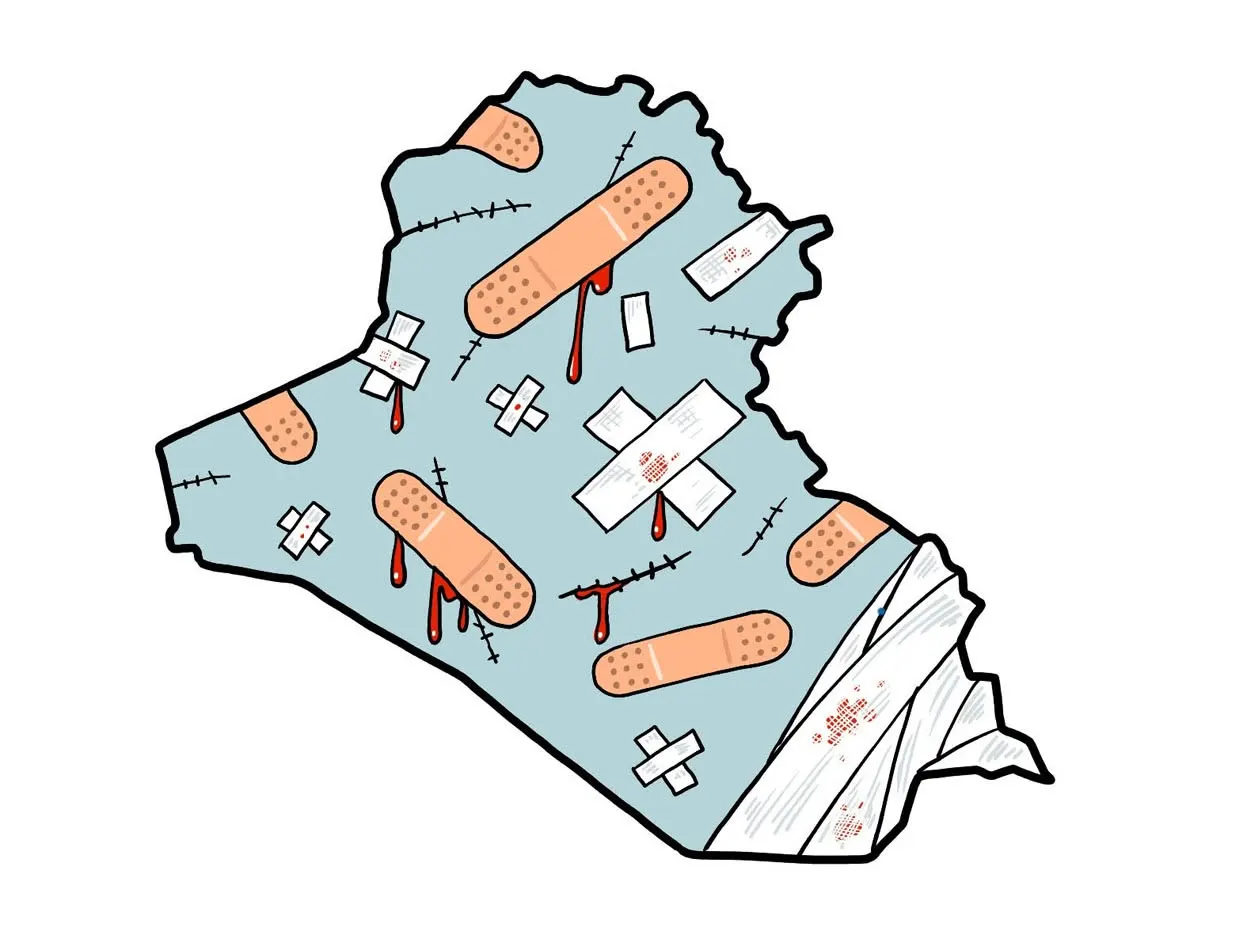
An Analytical Perspective on the Marginalization of Talent, the Crisis of Governance, and the Requirements for Peaceful Reform
Introduction: Iraq—Between State Potential and the Challenges of Reality
How long will Iraq—the land of ancient civilizations and the cradle of the Two Rivers—remain unable to harness the energy and expertise of its own people to build a state worthy of its history and its citizens? How long will competence, integrity, and merit continue to struggle against the challenges of the *muhasasa* (sectarian/ethnic quota) system, partisan loyalties, and narrow interests, rather than serving as the foundation for managing state institutions?
Iraq is not lacking in intellect; it possesses an abundance of scientific, administrative, and economic talent. It holds the resources and human potential necessary to build robust institutions, a productive economy, and a society defined by stability and justice. The true challenge, however, lies in transforming this potential into tangible outcomes that positively impact the lives of citizens and the future of generations to come.
This brings us to a fundamental question: Why does the gap persist between Iraq’s human and economic potential and the aspirations of its people—who seek competent governance, reliable public services, fair opportunities, and institutions that protect rights and remain accountable?
The issue is not about any single position or individual official, nor is it merely a transient political dispute. It concerns the future of the state, the nature of its governance, and its capacity to serve the public interest. When standards of competence and integrity decline—and when narrow interests take precedence over merit—institutions suffer, public trust erodes, and the chasm between the nation’s potential and the reality of daily life continues to widen. Addressing the crisis, therefore, requires an objective diagnosis of its root causes, a serious review of state management mechanisms, and a shift from mere grievance-airing to a call for peaceful institutional reform—grounded in the constitution and the law—that prioritizes the interests of Iraq and its people above all else.
First: The Marginalization of Competent Individuals and the Crisis of Governance
One of the gravest challenges facing a state is the transformation of public office from a national responsibility into a political reward or a privilege contingent upon loyalty. Leadership positions—at both senior and mid-levels—are not mere platforms for prestige or influence; they are responsibilities that demand knowledge, experience, integrity, the capacity for decision-making, effective resource management, and the ability to deliver results.
When competent individuals are marginalized or denied fair competition due to cronyism or political affiliation, the loss is not confined to the individual alone; it extends to the institution, society, and the state as a whole. Poor selection processes can lead to declining performance, the stalling of projects, the squandering of resources, and an erosion of public trust in state institutions.
This issue becomes even more critical when considering the academic qualifications and professional experience of those who hold public office. The authenticity of credentials and documents, as well as the relevance of an individual’s experience to the requirements of their position, must be verified through clear, formal procedures. Should it be proven that a qualification was forged or an invalid document used to secure a position, legal accountability must follow—without exception or selectivity—while upholding the rights of the individuals involved and ensuring their right to a defense. One must not conflate suspicions with established facts, nor should accusations lacking evidence be treated as foregone conclusions. Genuine reform is rooted in verification, transparency, and the impartial application of the law to all.
In any appointment process, the central question should always be: does the candidate possess the qualifications, experience, and integrity required for the responsibilities at hand? Furthermore, was the selection made according to transparent and fair criteria?
Prioritizing merit in appointments is not an elitist demand; it is a national necessity. A state that places the right person in the right position enhances its capacity for achievement, safeguards public funds, and instills in its citizens the confidence that opportunities for success are based on merit rather than loyalty.
Second: The Citizen’s Right to Oversight and Accountability
An Iraqi citizen is not merely a voter summoned to the ballot box, only to be left thereafter with no role in monitoring the performance of officials. True citizenship entails participation in public affairs, freedom of expression, the ability to track government policies, and the right to demand transparency and accountability—all within constitutional and legal frameworks.
Democracy is not complete simply by holding elections; it requires institutions that respect the will of the citizenry, provide clarity regarding criteria for appointments and promotions, and offer fair mechanisms for evaluating performance and holding those who fall short accountable.
It is the right of the Iraqi people to demand clear standards for assuming leadership positions, to verify qualifications and experience, to prevent conflicts of interest, to ensure the disclosure of the outcomes of government work, and to subject officials to objective evaluations based on the goals actually achieved.
Furthermore, young people—including those with academic degrees and professional experience—have the right to ask: Where are our fair opportunities? Why are some highly qualified individuals compelled to seek opportunities abroad, when Iraq is in such need of their knowledge, expertise, and capacity for development?
Reform does not mean targeting any specific party, movement, or social component; rather, it means establishing fair rules that apply to everyone. Influence should never serve as a shield against accountability, nor should independent opinion or political disagreement be grounds for exclusion or the denial of opportunities. Public oversight becomes all the more significant when it is grounded in information and evidence, rather than rumors or sweeping accusations. Citizens can contribute to safeguarding public funds by reporting irregularities for which they possess evidence, monitoring decisions and policies, supporting the press and responsible civic action, and demanding clear outcomes from investigations—within the limits permitted by law for public disclosure.
A state that respects its people does not fear legitimate questioning; instead, it integrates transparency and accountability into the operations of its institutions, viewing criticism as an opportunity to rectify errors and improve performance.
Third: The Suffering of the Citizen is the True Benchmark for Reform
Administrative reform cannot be discussed in isolation from the daily lives of citizens. An Iraqi seeking a decent job opportunity, a family awaiting adequate healthcare, and a young person looking toward a stable future—all are directly affected by how the state and its resources are managed.
Furthermore, one must not overlook the suffering of the displaced and those forced from their homes; families awaiting compensation and redress; the families of the missing and the forcibly disappeared who demand to know the fate of their loved ones; and everyone seeking to secure their legal rights and a fair trial.
These are not merely administrative files or statistics in a report; they are humanitarian issues concerning dignity, security, and family and social stability. It is the duty of state institutions to address these matters with seriousness and transparency, provide avenues for grievance redress, follow up on demands through legal channels, and hold accountable anyone found responsible for violating rights.
Raising slogans of reform is insufficient if citizens do not see tangible results in their own lives. True reform is measured by improved services, equal opportunity, the protection of public funds, the advancement of education and healthcare, better employment prospects, the resolution of the consequences of displacement, and the strengthening of judicial independence and the rule of law.
Moreover, building an economy cannot be achieved by relying solely on natural resources. It requires the prudent management of revenue, the encouragement of productive investment, support for the private sector, the development of agriculture and industry, the utilization of national expertise, and the creation of a professional environment that enables young people to work and innovate. Thus, the dignity of a citizen is not a favor granted by an official, but an inherent right that the state and its institutions must uphold; furthermore, improving the standard of living and protecting rights must remain at the forefront of public policy priorities.
Fourth: Iraq Is a Homeland for All—Citizenship Transcends Narrow Interests
Iraq is a homeland for all its people, encompassing their diverse religious, ethnic, social, and cultural spectrums. This diversity should be a source of strength and enrichment; it must never be used as a pretext for exclusion, discrimination, or the distribution of positions based on anything other than competence and merit.
The problem does not lie in political or social diversity itself—which is an inherent feature of Iraqi society—but rather in any practice that allows group affiliation to take precedence over qualifications, prioritizes factional interests over the national interest, or stifles fair competition among citizens.
When the quota-based system (*muhasasa*) becomes the permanent standard for managing institutions, it undermines the concept of citizenship, compromises the independence of administrative decision-making, and creates an environment where narrow interests prevail over the needs of society. Therefore, it is essential to develop fair institutional frameworks that ensure legitimate political participation without sacrificing competence, integrity, or accountability.
Iraq should not be reduced to a set of limited political arrangements, nor should the opportunities available to its people be confined to narrow circles. The state belongs to all its citizens, and its institutions are responsible for protecting their rights on an equal basis, regardless of their affiliations.
Consequently, there is a pressing need for a national compact rooted in equal citizenship, the rule of law, an independent judiciary, equal opportunity, respect for freedoms, the fight against corruption, and the guarantee of a peaceful transition of power in accordance with the Constitution. The unity of the Iraqi people does not mean that they must agree on every opinion or position; rather, it means coming together around common ground that protects their rights, safeguards their state institutions, and prevents differences from being used as a justification for hostility or exclusion.
Fifth: Youth and Society—From Demanding Change to Peaceful Reform
To the youth of Iraq—those with academic degrees and professional expertise, intellectuals, researchers, employees, and workers—and to every citizen who believes that their homeland deserves a better future:
Despair is not a solution, and silence is not the only way to avoid crises. Citizens can express their opinions, demand their rights, monitor the performance of institutions, and contribute to reform through free speech, organized civic action, responsible dialogue, and participation in public affairs.
However, translating demands into tangible results requires clear objectives, well-ordered priorities, and persistent follow-up. Public demands become far more effective when they are transformed into actionable proposals, measurable indicators, and clear legal mechanisms for accountability.
It is essential that civic efforts focus on issues that unite Iraqis—foremost among them being equal opportunity, the verification of academic credentials, transparency in public-sector appointments, the legal protection of whistleblowers who report corruption, the strengthening of independent oversight bodies, the improvement of public services, and the safeguarding of fundamental rights.
Article 38 of the Iraqi Constitution guarantees freedom of expression, freedom of the press and publication, and the right to assemble and demonstrate peacefully—provided that these rights are exercised in accordance with the Constitution and relevant legal regulations. Consequently, utilizing constitutional and legal avenues—such as filing complaints and reports supported by evidence, engaging in dialogue, undertaking civic action, and participating in peaceful protest—constitutes a legitimate path toward advocating for reform. The desired change cannot be achieved through bloodshed, vengeance, or attacks on institutions and individuals. Rather, it is attained by building a conscious civic will—one that upholds rights, rejects injustice, demands fair accountability, and protects society from being dragged into new conflicts that would only deepen its suffering.
Furthermore, confronting injustice does not mean replacing one form of oppression with another, and the pursuit of one’s own rights does not justify infringing upon the rights of others. A society’s true strength lies in its capacity to channel anger into an organized reform agenda—one that balances clear demands with respect for the rule of law, and persists in seeking change while safeguarding civil peace.
Consequently, it falls upon the youth, intellectuals, labor unions, and professional and civil society organizations to help foster awareness, propose practical alternatives, monitor public performance, and promote a culture of citizenship and accountability—all while steering clear of incitement and division.
Sixth: From Demands to a Measurable Reform Program
Restoring citizens' trust in state institutions requires moving beyond general promises toward practical steps whose outcomes can be monitored and evaluated. In this context, several priorities can be identified:
1. Adopting merit-based appointments by establishing clear, objective criteria for leadership positions—grounded in qualifications, experience, integrity, and a proven track record—while ensuring fair competition.
2. Verifying academic and professional credentials, auditing certificates and documents related to public office, investigating substantiated cases of forgery, and ensuring accountability through due legal process.
3. Strengthening integrity and combating corruption by supporting the independence of oversight and judicial bodies, developing mechanisms for reporting and investigation, facilitating the recovery of public funds in accordance with the law, and ensuring transparency by disclosing information and findings that can be made public.
4. Protecting citizens' rights and providing redress, addressing the cases of missing and forcibly disappeared persons, improving compensation procedures, and supporting the safe and voluntary return of displaced persons, in line with relevant legal conditions and safeguards.
5. Empowering youth and leveraging talent to enable national experts to participate in decision-making; fostering scientific research and administrative development; and creating a fair professional environment that helps curb the "brain drain." 6. Strengthening public oversight and transparency to better protect freedom of expression, the press, and civic action within the framework of the law; developing mechanisms for filing complaints; ensuring access to public information; and enabling citizens to monitor government programs and their outcomes.
7. Embedding responsibility and accountability by adopting clear performance indicators for officials and institutions, disclosing results transparently, and holding those who fall short accountable—based on evidence and fair procedures, free from political selectivity.
Merely declaring these priorities in programs and speeches is insufficient; it is essential to identify the entities responsible for their implementation, establish appropriate timelines, define progress indicators, and put in place mechanisms for oversight and follow-up.
Furthermore, these steps require genuine political will, capable institutions, an independent judiciary, professional administration, an active civil society, and citizens who assert their rights through legitimate means.
Institutional experiences highlighted in United Nations Development Program (UNDP) reports on Iraq underscore the importance of developing anti-corruption measures, improving the performance of relevant institutions, and enhancing the efficiency and transparency of judicial proceedings. While these reports do not replace the need for continuous assessment of the current reality, they serve as valuable references for understanding certain institutional challenges and identifying areas for reform.
Seventh: Can the Iraqi people unite around shared national demands?
Iraq does not need more promises; it needs a state managed with competence, protected by the rule of law, and empowered by the trust of its people. Its youth do not need rhetoric that breeds despair; they need institutions that enable them to participate, work, and innovate—institutions that respect their education, expertise, and right to a better future.
People of Iraq, the diversity among you should not obscure the reality that you share one homeland, common interests, and rights worth defending. Articulate your demands clearly, let free expression prevail over attempts to sow division, remain committed to peaceful methods and the rule of law, confront corruption with truth and evidence, and do not allow your suffering to become fuel for new conflicts.
Restoring the state is not achieved merely by changing individuals, but by reforming standards and institutions. It requires ensuring that public office is treated as a responsibility—awarded based on competence and integrity—that officials are held accountable, and that every citizen receives their rights without discrimination.
Unifying national demands does not mean eliminating differences; rather, it means agreeing on fair rules that protect everyone and ensure that competition serves Iraq, rather than coming at its expense.
Ultimately, a question must remain at the forefront for both officials and citizens alike:
When will Iraq become a state where competent individuals are chosen to serve the people, where the dignity of every citizen is upheld, where rights are protected, and where everyone is subject to the rule of law? The answer does not rest with a single entity; rather, it demands a shared responsibility among the state and its institutions, political forces, civil society, and the citizens themselves. Building a state is an ongoing national undertaking; restoring trust requires tangible action, measurable reform, and justice that excludes no one.
Iraq possesses a history, the energy of its people, and a wealth of potential that can pave the way for a better future. What it needs is sound governance capable of effectively harnessing these assets, fair institutions to safeguard them, and a national will that places the interests of the citizen at the heart of every decision.
Nations cannot flourish by marginalizing their own people, nor can they regain the trust of their citizens through promises alone—they do so only through justice, competence, integrity, accountability, and respect for the individual.
Sources:
1. United Nations Development Programme (UNDP), in cooperation with the United Nations Office on Drugs and Crime (UNODC) and the Iraqi Commission of Integrity.
*Corruption in Iraq’s Public Sector* — A study on corruption and integrity challenges within the Iraqi public sector, published on June 18, 2013. This serves as a reference for understanding certain institutional challenges from that period; it is not a recent statistical account of the current situation.
Official link: https://www.undp.org/iraq/publications/corruption-iraqs-public-sector
2. United Nations Development Programme (UNDP) and the Iraqi Supreme Judicial Council.
*Trial Monitoring Program Second Report* — The second report of the Trial Monitoring Program, issued on February 22, 2025. It addresses major corruption cases observed between August 2023 and July 2024, in addition to other cases and judicial rulings covered by the program.
Official link: https://www.undp.org/iraq/publications/trial-monitoring-programme-second-report
3. Constitution of the Republic of Iraq (2005), Article 38.
This article addresses freedom of expression, freedom of the press, printing, advertising, media, and publishing, as well as the freedom of assembly and peaceful demonstration, which are to be regulated by law.
Official link (Iraqi Council of Representatives): https://iq.parliament.iq/ Iraqi Constitution/
Invite you to visit our website at --------- to share your views and experiences, engage in responsible dialogue, and exchange ideas—all with the aim of understanding the challenges, exploring potential solutions, examining the root causes of the crisis, and considering the responsibilities of institutions."