
From Hormuz to Ukraine: Is the World Approaching a Major War?
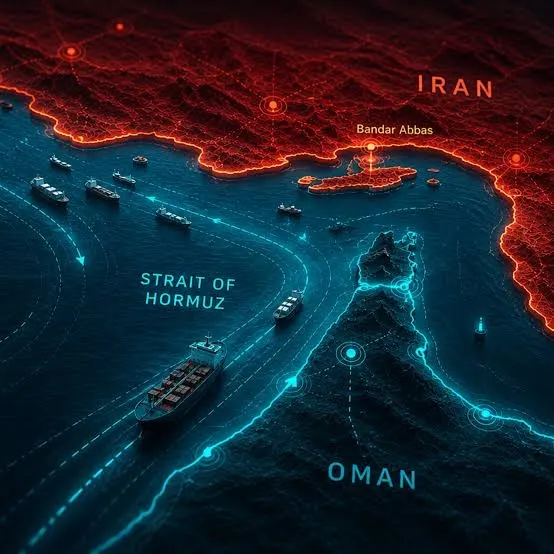
Global events are no longer merely isolated crises or localized conflicts contained within specific geographic boundaries; rather, they have become part of a vast international landscape where interests, conflicts, and alliances intertwine in ways unprecedented since the end of the Cold War.
From Ukraine—now an open theater of attrition between Russia and the West—to the Middle East, gripped by military tensions and regional conflicts, a new era is taking shape that could redraw the global balance of power and influence for decades to come.
The Russia-Ukraine war has transcended a mere dispute over territory or borders; it has become a true test of major powers' ability to assert their political, military, and economic will. Russia is fighting to defend its international standing and vital sphere of influence, while the West views the war's outcome as the determinant of the future global security architecture.
The situation in the Middle East appears even more complex. Escalating tensions are not confined to a single state or crisis; they span from the Arabian Gulf to the Red Sea and the Eastern Mediterranean, encompassing the maritime corridors that serve as the lifeblood of the global economy. Oil and gas have evolved beyond mere economic resources into tools of strategic leverage that shape the decisions of major powers and the trajectory of international conflict.
With every new escalation, attention turns to the Strait of Hormuz, the Bab al-Mandab Strait, and other vital waterways that have become integral to the global security equation. Disrupting or threatening these passages impacts not only the region but the entire global economy—a fact that explains the growing international focus on them. Amidst these transformations, a fundamental question arises: are we witnessing the emergence of a new international order, or are we entering a phase of prolonged global chaos?
The United States seeks to maintain its position as the preeminent global power, Russia works to dismantle Western hegemony, and China steadily and quietly expands its economic and political influence. Meanwhile, numerous regional powers attempt to broaden their roles and capitalize on the unfolding shifts; this jostling for interests and influence renders the world increasingly complex and unstable.
For Iraq and other regional states, a major challenge lies in safeguarding national interests amidst this rapidly escalating international conflict. Their geographic location, natural resources, and intricate web of relationships inevitably make the region a factor in the grand calculations of global powers, whether they desire this role or not.
Despite frequent talk of a third world war, the reality suggests that major powers remain aware that direct confrontation would be costly for all involved. Consequently, the current conflict manifests in various forms—ranging from economic sanctions and cyber warfare to proxy wars and struggles over energy, technology, and influence.
Yet, the true danger lies not merely in the decision to go to war, but in the risks of miscalculation, the accumulation of crises, and the intertwining of conflict fronts. History teaches us that many major wars did not begin with a deliberate, all-encompassing decision, but rather through a succession of events that spiraled out of control. The world today stands at a historic crossroads: either major powers succeed in managing their differences within a framework of balances that prevents a catastrophic explosion, or cycles of escalation continue to widen until they impose a new international reality—one unlike anything we have known in recent decades.
The question remains: is the world moving toward a more balanced, multipolar international order, or will the coming years witness further chaos and conflict that could redraw the global map of influence and power?